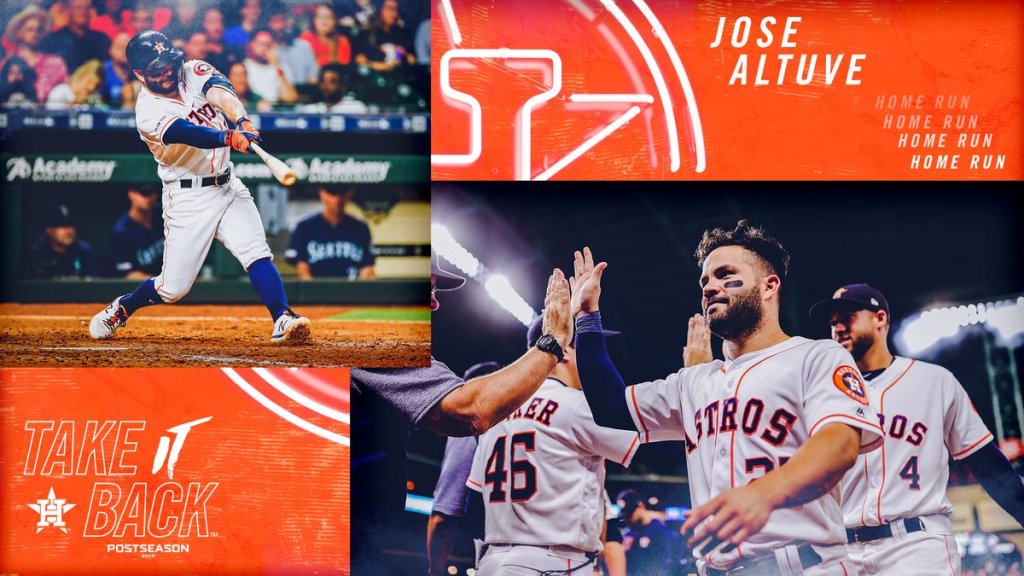
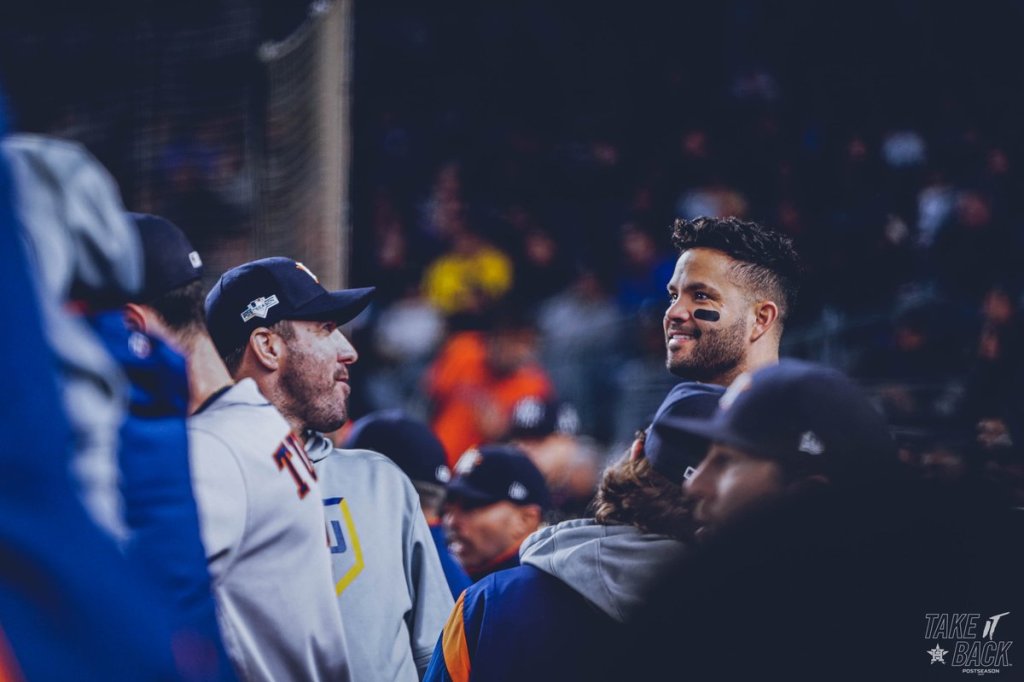
Q. Just coming to the park today knowing that you don’t really have much pressure on you guys, what’s the different mentality showing up today when the pressure is on the other side and they have to win? JOSE ALTUVE: I feel, like I said yesterday, we’re going to keep our game plan. We’ve been coming to the field to play a hundred percent, to do everything we can to win the game, and not because we are up in the series 3-1 we are going to relax or think about this game is not as important as it was yesterday.
We need to win today, and like I said, just keep moving forward.
Q. Award season is obviously coming up, and Yordan is getting a lot of consideration for Rookie of the Year Award. What has set him apart and what has impressed you most about him as a young player? JOSE ALTUVE: Well, I think what impressed me the most is how smart and smooth he is. He came in big situations during the season and he act normal. He was like he’s been there before.
His approach, his mentality, everything about him is so good. What I like a lot about him is how hard he works and how humble he is, that’s huge for him.
Q. There’s been a lot made of launch angle and exit velocity the last few years. But the changes in pitching have been just as dramatic with the high fastball and a lot more breaking balls being thrown. What sort of challenges have the new pitching philosophy presented to you and to other hitters? JOSE ALTUVE: That’s a tough question. Yeah, you can tell now that pitchers are throwing more forcing fastballs up and sliders down and away. So as a hitter you want to always look for a fastball and then react for other things. But now with the separation of the two pitches it’s like you have to pick one and then if you don’t get your pitch, you might strike out. That’s why we’ve seen a lot of strikeouts lately in the game.
Q. When you were here with the Astros in all the tough years that you went through, how hard was it to kind of believe that you could have seasons like this where you’re winning a hundred games and getting to the World Series and winning it? And what made you confident that you could have years like this? JOSE ALTUVE: Well, yeah, I still remember when we lost a hundred games three years in a row. It seems like we were in the very, very bottom. So the only hope I have was to keep working hard because everybody keeps telling me, Yeah, we’re going to win a championship, we’re going to be a really good team. So I wanted to be a part of that.
It was hard to believe but it happened. And I think I said it last week, we couldn’t be here without being there. So one thing complement another thing. I think we learn a lot from losing.
Q. You’ve been around for a while. With CC Sabathia having thrown his last pitches last night, what comes to mind when you think of a guy like that? JOSE ALTUVE: Leadership. I never got the chance to play with him but I talked to a lot of his teammates and they all say he’s a great guy. He’s the best teammate you can have. I feel really good for his career. He has a tremendous career.
I feel kind of bad last night because — you don’t want a guy like him get hurt in his last maybe appearance. But if you see the big picture, he has a tremendous career.
Like I said, I didn’t have the chance to play with him but I really admire him the way he goes in there and do everything he can for his team.
Q. Sometimes with ubertalented teams it feels like they think they can out-talent other teams or they take the foot off the gas pedal. But for the last three seasons, Houston hasn’t done that. What has been the driving factor for you guys and how do you stay so focused and confident? JOSE ALTUVE: Maybe the chemistry of the team, relationship between the players. And like I said all the time, we have a team full of good players but none of these guys are selfish. They don’t want to be the star. They don’t want to be the MVP; they just want to win. And when you have guys going in the same direction I think it’s easier.
When you have too many good players trying to be stars or MVP, I think teams going different ways. And that’s why I always say we have 25 leaders on the team. Even when people — I heard a lot of people say we don’t have leaders in the clubhouse, but we do. We have 25 people going in the same direction, and that’s probably even better than having only one guy being the leader.
Q. Your manager has repeatedly called you the heart and soul of the franchise. How does that make you feel? And how have you been able to maintain your level of success in the postseason? JOSE ALTUVE: Well, AJ, he’s obviously a great manager and he’s really good at communication with players. And he has helping me a lot. I really appreciate his comments, especially the way he is.
But I think the same way about my other teammates. It’s really hard to not believe George is the heart and soul of the team. And then you have Bregman, which is a guy who is full in love with baseball. He loves baseball.
I always say this team doesn’t have only one — we don’t rely on only one player; we rely on everybody. And I love the way we’ve been playing right now and we’ve been helping each other.
Q. What has it meant to you and your teammates that every year during the stretch the front office seemingly finds a way to find weapons during the season? JOSE ALTUVE: Same thing, we’re pulling in the same direction. I think they see us as a player going to the field and playing hard every single day that they really feel responsible for backing us up and finding pieces to make this team better even when people think this team can be better.
Like last year or ’17 we got Justin, then last year we got Gerrit Cole, and now we’ve got Zack. It’s really impressive what they doing and I just feel happy for that.
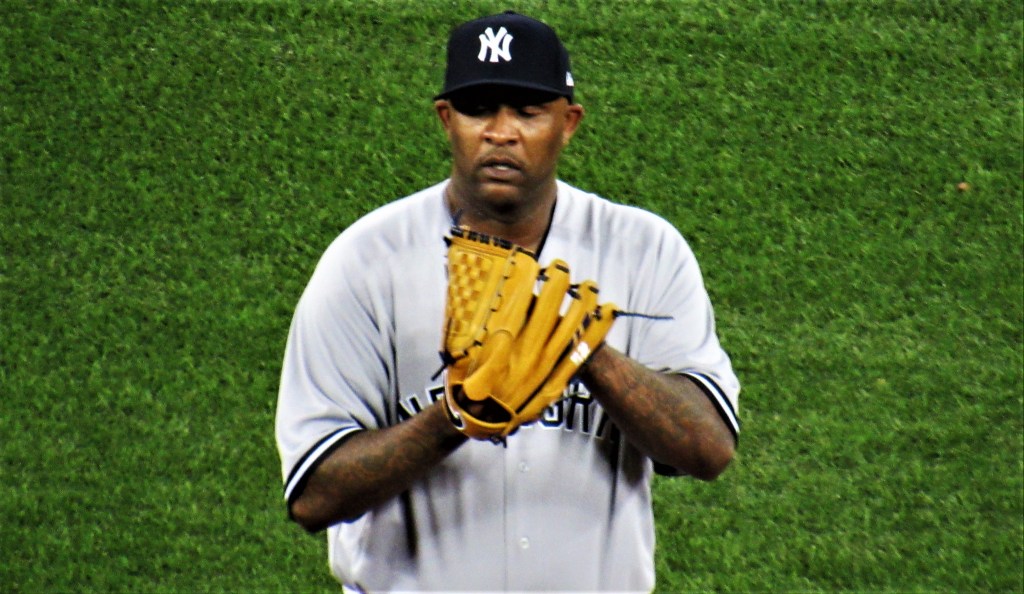
Q. Did you have pain going into yesterday’s game and can you just kind of describe what you felt on the mound when that all happened? CC SABATHIA: Yeah, I had no pain. I’ve been feeling good the last week, ten days, whatever. Arm has been feeling fresh, everything has been feeling good.
And just that last pitch to Diaz when he popped up, I just felt like when I released the ball, my shoulder kind of went with it. I told Stevie and those guys that I subluxed it before one time when I was really young, first years in the big league. That’s kind of what it felt like.
But today it’s really sore. So I don’t know.
Q. Could you just describe the emotions of coming off the field, the fans are chanting your name, the other team is clapping for you. CC SABATHIA: Yeah, that was — I think that’s what got me more emotional than actual injury. Just hearing the fans and the way that they were cheering me and it was just — makes me feel good. Makes me feel like I made the right choice 11 years ago. I love these fans. I love this organization.
It was just awesome to hear that and get that on the way out.
Q. If you did it on that pitch to Diaz, it means you threw three more pitches and then and a warmup pitch. How did you do that and how did it feel? CC SABATHIA: It felt terrible. I just was hoping Springer swung early. And once I realized this was going to be a long at-bat, I think Stevie came out and we kind of realized that I wasn’t going to be able to do it.
When I was throwing those pitches to Springer, I couldn’t even look up to see where I was throwing the ball. I was just letting it go and whatever happened, happened.
Q. Could you kind of talk about what you told the guys in the locker room, in the clubhouse there? Are they rallying behind you? What’s the mood coming into tonight’s game and how has your efforts and all the fortitude that you have shown this season, especially during yesterday, how does that help to rally the team to know that they’re going to get a win tonight? CC SABATHIA: I think the mood in the clubhouse is pretty good. I think we’ve had our backs against the wall all year. We’ve dealt with so many injuries, not just myself. That’s a tough group in there and our slogan has been: Next man up. We’ve overcome so many different adversities all throughout the year and been able to get to this point.
So, yeah, we’re in a tough spot, backs against the wall, but I feel good about our guys and our chances tonight. Just one game at a time.
Q. I know you didn’t want to go out like this obviously, but how would you kind of sum up this kind of being the end for you? CC SABATHIA: I told Amber last night that this was the best way for it to end for me, because of the way I’ve been feeling, loving the bullpen, jogging out, feeling pretty good. I feel like about July of next year I’ll be like, I think I can pitch.
So knowing that obviously the way I feel now I can’t — I think it’s just kind of fitting. I threw until I couldn’t anymore.
Q. A lot of players were tweeting out their thoughts to you last night, Joe Girardi was emotional on the network talking about you. What does it mean to see all the players, seeing your former manager coming out and saying all the things they are? CC SABATHIA: Makes you super emotional. So many texts, tweets, so many things. It’s been awesome. It’s been good to get that support from my teammates and just fans in general. So, yeah, I mean, I watched Joe last night get emotional, got some texts from some guys, and a lot of emotional. But it’s all good stuff.
Yeah, it’s just an honor and a blessing.
Q. I know you’re kind of on your own time frame right now, is there surgery, what’s the prognosis for you? CC SABATHIA: We don’t know. Just kind of wait. Maybe get an MRI after we get back from Houston and just see.
Q. How much pain were you in last night and how much pain are you in now compared to the usual pain you put up with the last few years? CC SABATHIA: I was in a pretty good amount of pain last night and today. Waking up, I didn’t sleep that good. I don’t know what I did but it’s pretty sore and the pain has been pretty intense since that pitch.
Q. Aaron Boone and a lot of your teammates spoke after the game about having watched you and the effort that was required for you to pitch and all the health issues that you worked through. Now that it’s over can you give some context about how much effort it did require you to get ready to pitch given the issues you’re dealing with? CC SABATHIA: Yeah, for bullpens, game days, any time I had to get on the mound it was a two-and-a-half hour process, from hot tub to training room to weight room, different treatments and things like that. I would throw a 15-pitch bullpen and take me two and a half hours to get out there. That’s the part of it that sucks.
And as you get older, that’s the part I used to laugh at Andy Pettitte about, and now I’m going through it or went through it. But it’s just part of it. And it’s rough. But it makes it all worth it when you can get out there.
Q. What is the message to the fans? This is the end of your career. You said this is the end. And Aaron Hicks called it a Hall-of-Fame career. CC SABATHIA: Message to the fans will be just thank you. It’s been an amazing 11 years. I’ve loved every minute of it here in the Bronx, and really worldwide, Yankee universe is worldwide. I’ve enjoyed being a part of it, so thank you.
Q. Just wondering, what did Amber say when you brought up the idea of pitching next year? CC SABATHIA: She just laughed. But she knows it’s true because the way I’ve been feeling the last couple of days, the last ten days or whatever, yeah, that had been on my mind.
Q. What is ahead for you? What do you think you’ll be doing this time next year? CC SABATHIA: Hopefully here watching playoff games. Definitely hanging out with the family, continue to do my podcast, and just see whatever happens.
Q. Two different things. One was it didn’t seem like you were warming up while Ottavino was pitching last night. Were you saving bullets or were you already feeling something and you didn’t want to throw out there? And the other thing is, on a different subject, you, like Cole and Verlander now, kind of gave your arm pitching a certain way through the majority of your career as a starting horse. Do you appreciate that even now as it probably cost you your arm on the back end? CC SABATHIA: Yeah, the first question, I just warm up fast. Like, I was ready. And I knew I had to run in. So I was just sitting down waiting to get called in to make that run. But it doesn’t take me that long to warm up.
I feel fine. I felt totally fine, I felt great until that one pitch. I warm up pretty quick and I was ready to go. Probably I think the second hitter that he was throwing to I was ready.
Q. (No microphone.) CC SABATHIA: Yeah, it is what it is. That’s what I signed up to do. Pitch as long as I could and as hard as I could and take the ball every time out. Yeah, I have no regrets at all.
Q. When we’ve asked you periodically during the season to look back on your career you’ve said, I’m focused on this team, winning, getting to October, I’ll reflect later. Can you look back on this season? Is there one thing that stands out to you about it? CC SABATHIA: I think when I look back on this season I think just the way we dealt with adversity. For such a young team, so many guys going down. This season could have been over a long time ago. The way we fought, the Gio Urshelas, the Mike Tauchmans, the way the guys stepped up and we won the division with not really having our A lineup out there every day.
So just the way these guys fought, the adversity, how tough they are, is what I’ll take away from this team. And going forward I know they’ll be fine just because of what we went through this year.
Q. Did the bone actually pop out of the socket? Did they have to put it back in? What was the whole procedure there? CC SABATHIA: That’s why I said I don’t know if it actually subluxed or whatever happened, but when I did the test back there it was back in the socket. But we haven’t had any MRIs or any further tests to see what actually happened.
Q. You’re a guy that’s obviously pitched through a lot of discomfort and pain the last few years. Where does that mindset come from? Is that something that was taught to you, that you adopted yourself? CC SABATHIA: I think it was just something that just watching different guys, getting a chance to watch Chuck Finley at the end of his career, beginning of my career, Dave Burba, just the way those guys grinded through games, and the way they took the ball every time out, how tough they were. I just kind of wanted to be that. And having those kind of examples just kind of led to me wanting to take the ball no matter what.
Q. I know that going back a few years that epic run you had in Milwaukee was so inspirational for so many people and yet you were going to be a free agent and during that time anytime it could have ended, like last night, you could have thrown your arm out. I know you said you don’t have any regrets over your whole career. Looking back on that over the years since, was there ever moments where you said, man, I was crazy or how many people told you you were crazy? CC SABATHIA: Everybody told me I was crazy. But, no, I wish I could have pitched three more times. That team was so good. We were having so much fun. I got traded over there and felt like, I said this a bunch of times, I felt like I had been there ten years. That clubhouse was so much fun. I was healthy, felt fine and wanted to get us to the playoffs. No, I have — I would have took the ball as many times as it required to help that team win.
Q. When you answered Buster’s question, that routine you described doesn’t sound like any fun whatsoever. What made it fun for you? CC SABATHIA: Being able to get out there, being able to pitch and be out there with the guys. What it’s about for me is being able to go out there and compete no matter what I had to do in the clubhouse to get out there I’m going to try to do it and be out there with the guys and give everything I have.
Q. What was your favorite part of pitching, the act of pitching, itself? CC SABATHIA: I mean just, you know, even just last night, just being out there, you know. I kind of felt — I always felt like being the pitcher of the game, stopped and started on me. And I kind of felt like I was in control all the time and that was just the best part about it is 50,000 people in the Bronx and shit don’t start until I’m ready, so that was the best part (laughter).
Q. What was your takeaway on the hard contact that the Astros made against you the first time? And were you at all concerned about tipping, because it had been a problem for you earlier in the season?
JAMES PAXTON: Not concerned about tipping. I made some mistakes and also they hit some good pitches.
So I’m going to go out there and attack and try to make the best pitches I can.
Q. I know you’ve been asked about it quite a bit and there’s reports about issues with them stealing signs or reading tips on pitchers, how much do you think about that actually going into the game or even when you are in the game?
JAMES PAXTON: In the game I need to focus on pitching. We try to mitigate that and look at it between starts and we didn’t think they had anything, and still don’t. So I’m going to go out there and compete. If there’s anything we think they’ve got in the game, we’ll address that, but as of right now I don’t think they have anything.
Q. Aaron’s been very aggressive with his bullpen and told the starting pitchers that he would be aggressive. Is it difficult going out there knowing that one or two bad at-bats in a row might be the end?
JAMES PAXTON: I can’t worry about that. That’s his job. I leave that to him. When I have the ball in my hand, I’m going to do everything I can to help the team. I’ll go out there and compete and that’s what I plan on doing.
Q. Did you actually look to see if you were tipping your pitches after the last start?
JAMES PAXTON: We took a look at it and I don’t think I was giving anything away.
Q. What do you look at it when you try to figure that kind of thing out?
JAMES PAXTON: We look to see if I’m doing anything out of the full windup from one pitch to another, whether I’m throwing my fastball or my curveball, if I’m doing anything different. Same thing out of the stretch. I know they’re trying to pick it up out of the glove at second base, and I’m doing what I can to make sure they can’t do that.
Q. With now the prospect of four days in a row, is there anything on the starting pitchers to come through with longer outings, especially with the prospect of an all-bullpen game in Game 6?
JAMES PAXTON: Yeah, I think that we want to go out there and go as deep as we can, that’s always the goal. We’ve had plenty of times this year where we’ve played four games in a row. And it’s the same as always: We’re going to go out there and do our jobs.
Q. This is your first playoff experience this fall. What have you taken from that? What is different from pitching in the regular season for you and what can you use tomorrow night from that?
JAMES PAXTON: There’s a higher intensity. But overall it’s the same game. You have to treat it the same way. It’s just being able to mentally treat it the same way even though there is that extra intensity and what we’re playing for.
But ultimately if you can play the game the same way you did in the regular season, you’re going to have the most success.
The roster move means that if the Yankees were to win the next three games and advance to the World Series, Sabathia would not be eligible for the roster. He announced before this season that this year would be his last.
To take Sabathia’s spot, the Yankees activated right-handed pitcher Ben Heller, who was among the players staying ready at the team’s complex in Tampa. Heller had a 1.23 ERA in six September relief appearances.
Q. The first two innings Tanaka was cruising, the third inning he kind of lost it. I’m just wondering what happened there. And overall how you think he did. AARON BOONE: I thought he battled well. They made pretty good contact with him, he didn’t have a lot of strikeouts. The fact that he got as deep through their order as he did I think kind of speaks to his guile a little bit. I didn’t really think he had his split tonight. But he made some pitches.
They squared him up a handful of times right at some guys. So I thought he battled well and made some pitches when he had to, and obviously made the big mistake on the split that turned into more like a two-seamer, which it seemed like how his split was working a little bit tonight.
Considering, I thought he battled well. And I thought they took some pretty good at-bats against him.
Q. You’re disappointed with the team’s hitting with hitters in scoring position and defense? AARON BOONE: We played poorly tonight, there’s no other way to explain it. And we need to flush this immediately because — we talked about it as a team, we need to get over this in a hurry and come put our best foot forward tomorrow.
And now stranger things have certainly happened, a lot stranger. And we need to play a cleaner game, obviously, if we’re going to beat a team like that. But we did not get it done tonight.
Q. You just talked about it with the guys in there? AARON BOONE: Yeah.
Q. Does the way your team played, as you put it, as poorly as they did, make it more difficult to bounce back quickly? AARON BOONE: No, our guys are studs and I think they embrace the challenge. Obviously we’ve got our backs against the wall now and we’ve had it there in many ways from the adverse situations we faced all year. And I know these guys will come focused and ready to go tomorrow, and I can’t wait to see them go out there and play our game.
Q. How disappointing is it to have this kind of a poor performance on this stage? AARON BOONE: I mean, I think I just said it. We didn’t play well tonight and it’s frustrating. But in the playoffs you need to get past it. You need to flush what’s already happened in a hurry because tomorrow’s too important.
Q. CC, what’s his situation? AARON BOONE: Yeah, we’ve got to see more about it, but not good with the shoulder.
Q. I think fifth inning you guys had bases loaded, two outs, and Encarnacion coming up, he’s been struggling a bit. You talked before the game about if you had the right situation you would send Stanton up. Did you consider using him there? AARON BOONE: No, no.
Q. Why not? AARON BOONE: That wasn’t the situation I was considering.
Q. Is it a lack of sharpness that you see there or what? AARON BOONE: Well, I mean, I think Hicks has had really good at-bats in both of his days. Edwin started out swinging the bat really well in the Twins series, had a few games here where he struggled a little bit. Gary finally got into one tonight, which was nice to see.
So I mean, if you’re asking rust, I don’t know, I feel like they’re good and solid, have played enough and have accumulated and seen enough pitches that they’re in a position to be successful.
Q. As this game went along obviously your team was playing worse. Do you think your team gave into the frustration of the moment in this game and that explains what those last few innings looked like? AARON BOONE: I don’t think so. We didn’t make a couple of plays and that’s frustrating, obviously, and I think our guys are frustrated over that. But, again, it’s imperative that we not dwell on it. And we need to get past this and I know our guys will.
Q. A lot of strikeouts tonight in big moments. You guys scored the most runs in the game but you did strike out a lot. How hard is it sometimes to execute when there is swing and miss in your game? AARON BOONE: Well, I mean, that’s one of the differences right now is these last few games it’s just having opportunities. And I feel like we’ve done a pretty good job offensively of putting ourselves in position to have that breakthrough inning where we can throw a crooked number up there or get that big hit to kind of get us rolling. Part of that is they’ve pitched us tough and that’s part of it.
And then the other thing is when you have a couple of games where obviously it’s magnified and you don’t get a couple of hits, that’s part of it, too. The strikeouts for us are going to happen. It’s a matter of us taking good at-bats.
Q. Kind of following on what Tyler just asked, that first inning you have Greinke on the ropes, Gary strikes out and Greinke settles in. Do you think Gary gets a hit there, there’s a chance Greinke is out of the game? AARON BOONE: No question, that’s an opportunity. That’s also taking a two-out hit. Chances are you’re not going to get a two-out hit.
But if we’re going to break through and have success, we’ve had our chances here these last few days, we’ve got to come up with a big hit in a big spot.
Q. In the fifth inning, Gleyber’s check swing, did you think he went? AARON BOONE: I haven’t looked at the replay. I thought he did from the side.
Q. You go to Ottavino, he gives up the double to Bregman. What are you seeing from him, and do you see his role changing this series? AARON BOONE: I think it kind of in a way changed a little bit. He’s been hurting different cases. He walked the leadoff hitter the other day. Obviously he gave up the first hit homer to Springer over in Houston.
And then today with two strikes there to Bregman where I thought he was having a good at-bat with him, just makes a two-strike mistake, a slider that looked like it just caught too much of the plate. And then he was able to get the ground ball that we’re not able to turn over.
So obviously frustrating for him right now, but it’s about execution. So that’s been the bugaboo in some different situations for him.
Q. Do you envision a roster move with CC and do you know who it would be to replace him? AARON BOONE: We’ll talk through that. I do think there’s a chance of it. We’ll kind of go through that process and I’ll get with C and see where he’s at, and we’ll talk about who that would be.
Q. Second of all Paxton, his biggest start as a Yankee, what do you hope and expect from him tomorrow night? AARON BOONE: He’s got to go out and pitch well and set the tone for us. Because we want to get on that plane to Houston now, and that starts with Pax.
Q. What did you see from Ryan Pressly in that fifth inning and how was he able to neutralize you guys? AARON BOONE: I think we got a couple of guys on on him and again put ourselves in position. I thought he made some good pitches, mixed in both his curveball slider and threw some good fastballs in situations, too. I think he did a good job of settling in and buckling down. We’ve had a little bit of success against him in this series, and then he made some pitches there to get out of an inning.
Q. Can you kind of take us through your thinking the fifth inning when you take out Zack. Are you thinking, I’ve got to find a way to win this game if it finishes 3-1? AJ HINCH: Well, I don’t know about 3-1. I don’t think you ever consider the score being done, especially with these two offenses. I did think Zack stopped making pitches the same way he was making pitches leading into that inning. Then as we know in this ballpark, when the inning starts to grow and build and the momentum starts to swing in their favor, really just a fresh arm with some power behind it and a good breaking ball.
I brought him in against Hicks. He made some really good pitches, too. And those guys have played together. So I think they had some familiarity. But he had a really good at-bat and then two big outs after that.
Press has been one of our guys that we’ve leaned on so heavily, but that was a really, really nice time of the game for him to come through big and feel back in the mix in a huge leverage spot.
Q. (No microphone.) AJ HINCH: Just kind of reading the at-bats. Because Pressly is really good. The power breaking ball I thought was going to be really good during that group of hitters. But so a little bit of combination of both. Torres had killed Greinke over the last couple games, too. I was well aware of that.
Q. Just going back to Zack’s first inning, the last thing you expect to see out of him is three walks and two four-pitch walks, then he settled down and start rolling. What did you see? AJ HINCH: You know, the walks — the early walks in that inning, in the early walk in that inning was very unusual, just because he rarely misses four times in a row. They had very disciplined at-bats. So I think it was a little bit more about them being disciplined. They were going either/or; they were either going to ambush him or they were waiting him out.
That was a huge, huge time in the game where once they get one, I mean, they’re one swing away from really making it difficult on us. And that was just the beginning of the stress of the game, and there were other multiple big spots.
But Zack getting out of the first with only one run, having spent a lot of pitches and a lot of stressful pitches and some really good at-bats by the Yankees was pivotal for us to hang in there.
Q. You mentioned Pressly and what he did, but your entire bullpen, Josh James gave up a couple, but guys didn’t even give up a hit. Can you discuss what went into their night. AJ HINCH: James had an incredible recovery inning after that. He gave up the homer to Sanchez, even him coming in and not throwing strikes in the very beginning of his outing, and Sanchez hits the homer.
Again, the momentum that builds in this building, and with that offense, they’ve been looking for a spark over the last couple of games to kind of kick-start them. And Sanchez’s homer could have easily done that if Josh doesn’t settle down and get through that inning.
Then Will Harris, standard operation. Will kind of comes in, does his job. Joe Smith was an error away from having a clean inning. Osuna coming in and getting a big out in the eighth inning and then waiting around a little bit, and then I sent him back out to finish the game and be done with it. Did a nice job having a scoreless outing.
Our bullpen was asked — I was asked a lot about our bullpen coming into this series. The series is not over, but so far this series our bullpen has been huge to complement a really good starting rotation.
Q. Before the game I asked about your faith in Yordan Alvarez, he reaches on the error tonight, Bregman scores. Maybe it’s not a big fly but what’s it to feel like your faith is rewarded? AJ HINCH: He’s fine. He’s going to be fine. He’s going to be in the lineup tomorrow, too.
Yordan is a big part of our offense, he’s a big presence. I see back-to-back series where really good teams are game planning around him, they’re making decisions based on him in the lineup. They seem to always have a lefty up. For these guys they want either Green or Kahnle with the high fastball to be up when he’s coming around. I can just see the teams are still very, very aware of him.
And again, he’s one swing away from doing some serious damage. So I think his swings will steadily get better as the series continues.
Q. After taking the 3-1 lead, how confident do you feel having Verlander? AJ HINCH: After the 27th out is when I start to have immense confidence. I had confidence in JV beforehand, that’s why I announced that he was going to pitch Game 5. The 3-1 lead had nothing to do with it. I wasn’t even really thinking about Justin. I’m not sure where he was.
When the game ends and we go into the next game, I love the fact that we have JV on our side. And he’s going to set a tone tomorrow that hopefully leads us to the World Series.
Q. CC obviously left in unfortunate circumstances. TV cameras captured at least Gerrit and George applauding him as he walked off. How tough is it to see a pretty well respected guy possibly end his career like that? And what’s it say for him that he got that reception in the middle of a playoff game? AJ HINCH: You know what, CC, I have history with him. I caught him in Spring Training, and I faced him, one of the last standing guys I faced. I’ll officially be old when he and Fernando Rodney retire.
I hate to see that for him, I hate to see that for the sport, and we hope he’s okay. Our entire dugout was on the top step paying our respects to him trying to gut it out.
I don’t know what was wrong with him. I know he’s been banged up. You can see the impact he’s had on numerous players on our team and me and everybody else that we have so much respect for him that in the middle of a heavyweight bout of playoff baseball we all can keep our senses about us and pay our respects to what his effort was.
Q. The Yankees bullpen is never pleasant to face, but as you’ve seen some of the same guys game after game, do you sort of get the sense that your hitters are starting to feel and appear a little more comfortable against them? AJ HINCH: I don’t know about comfortable. I just think our guys are pretty good, and we have a pretty good game plan. As with all guys, it comes down to execution. If they miss their spots, whether it’s a starter, reliever, it just comes down to the pitcher-batter confrontation. And these guys, we’ve got really good players that can win some of those, and they’re still bringing some serious guys out of the pen.
“Comfortable” is a bad word to use because these guys are really good. Seven-game series are always going to increase familiarity as the series goes. But so are they. I’m bringing Joe Smith every game, Will Harris has pitched every game, Osuna has pitched. They’re getting their clean looks at our guys, too.
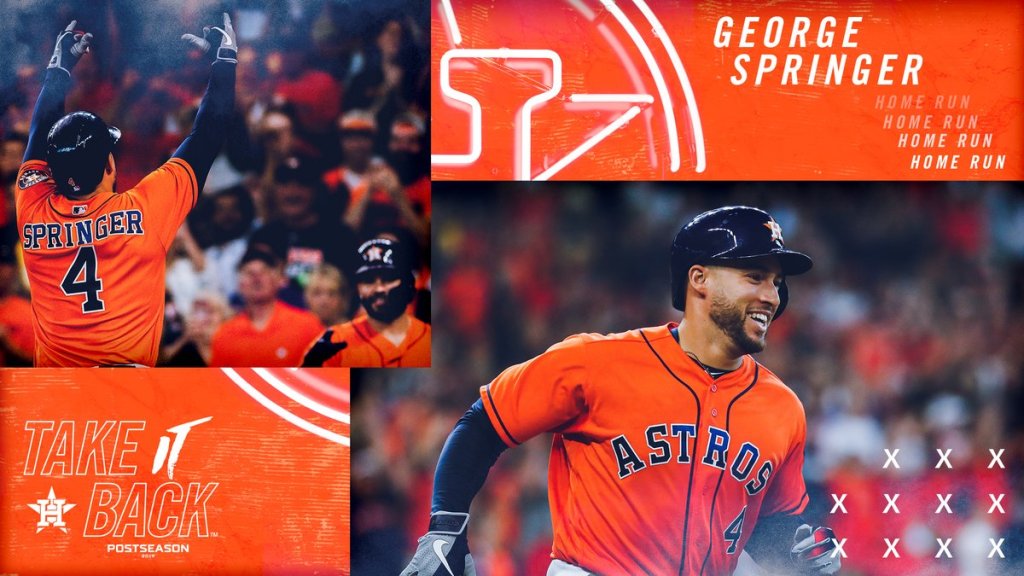
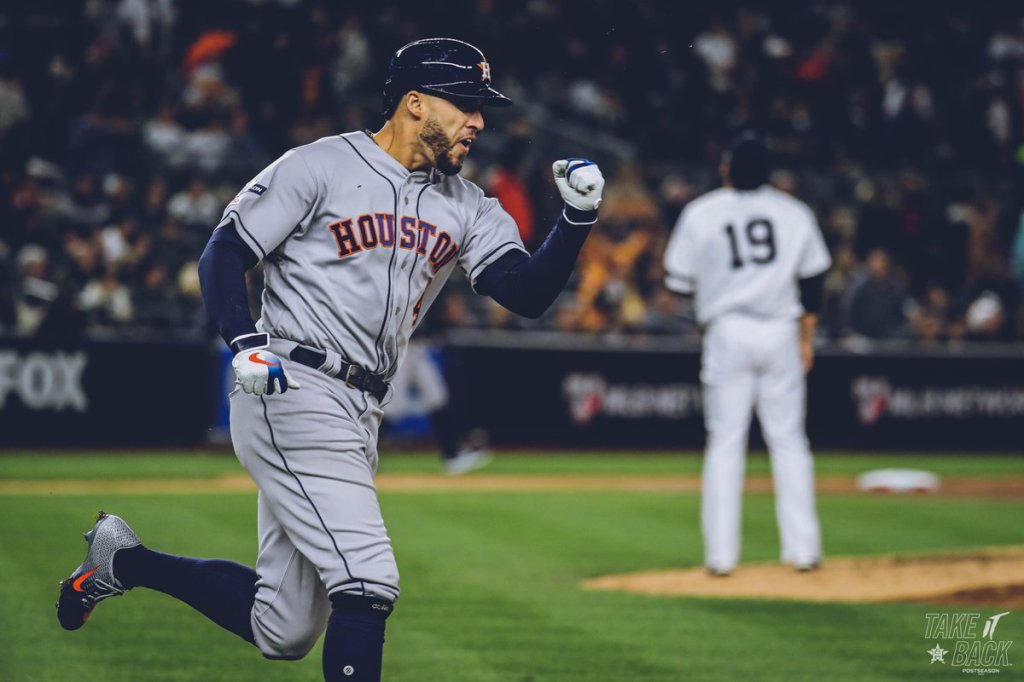
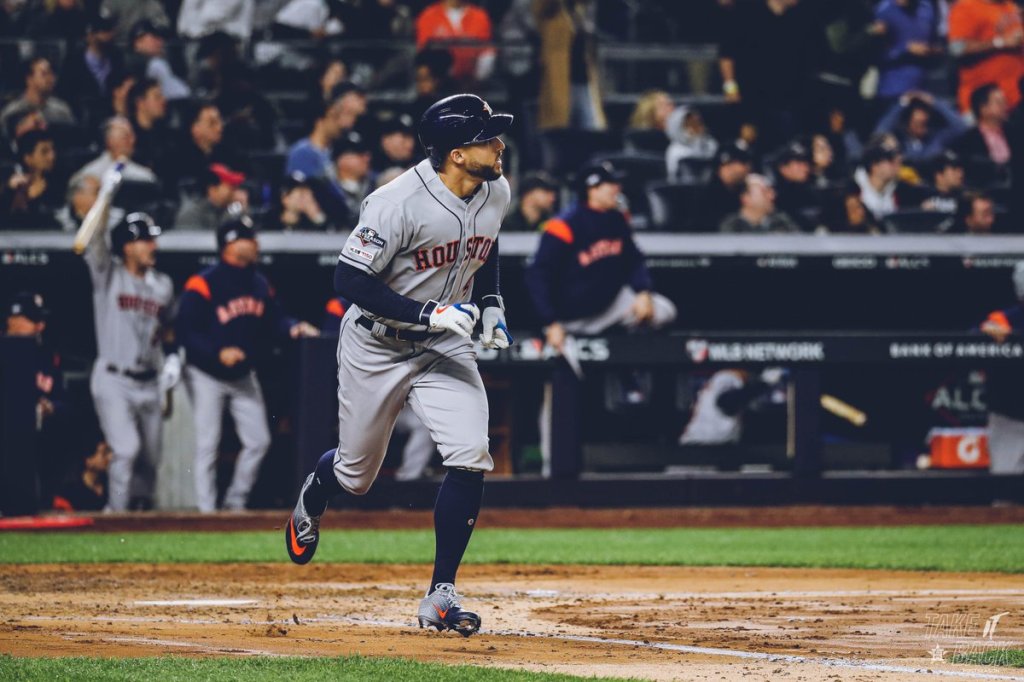
Q. You still haven’t had a player or two go four for five and just light it up, but you’re getting enough that you need across the board, I don’t know if you know last week Bregman said you’ve got a lot of Mr. Octobers on this team, so it’s Team October. Is that kind of something that balances you guys? AJ HINCH: I don’t think we really look at who’s doing what. I just think you try to win the at-bat that you’re in. We had two really big swings that left the yard with Carlos and George. But there’s a lot of good at-bats that led them to being three-run homers. Three-run homers aren’t by accident. We had to draw a walk here, Reddick had the single before George’s homer.
We did a lot of things right and we have a team offense. We have a lot of big names. We have a lot of guys that have some star appeal. We do have guys any given day that can bust out and have that big monster night. Our team is at our best when everybody is doing something, and we put a lot of pressure on the opponent every day.
Q. What do you think about Tanaka tonight compared to the first game? AJ HINCH: So Tanaka was good. I thought — he changed his game plan a little bit, he threw a few more fastballs. He’s always in complete control of himself and of his pitches. Today we had a little bit more disciplined approach. We made him stay on the plate and then we hit a mistake or two and put pressure on him.
I was surprised by the lead-off walk to Chirinos. That’s very uncharacteristic of Tanaka, and we made him pay for it. All in all, he’s a difficult at-bat because he can execute his game plan nearly flawlessly. But the fact that he made a mistake or two and we capitalized was a big difference in the game.
Q. From a pitcher’s standpoint can you talk about your mindset on pitching with the series tied or if you have a 3-1 lead?
JUSTIN VERLANDER: I mean, I guess the answer is you don’t want your mindset to change, whether you have a series lead or not. Any game can swing on any moment and the series can swing on that moment, as well.
I guess you just don’t let off the gas, you just stay focused and try to do the best you can.
Q. Have you had any exchanges with Max since they clinched the pennant?
JUSTIN VERLANDER: No.
Q. And secondly, 15 pitchers who threw 200 innings this season, five are still in the playoffs. Ten years ago there were 15 pitchers 26 or younger who did that. Do you see a trend developing with the success you’ve had, the Nationals have had, teams trying to develop more young pitching?
JUSTIN VERLANDER: I hope so. I do think teams are starting to realize pretty quickly how valuable starting pitching can be for the longevity of your team, for your bullpen, for all those things.
I think there are situations where an opener or getting the starter out of the game quickly might behoove the team in that given circumstance.
But throughout the course of a long season, 162 games, I think those guys that can go out and take the ball every five days are extremely valuable, and I think they should be looked at as such. If you can go out there and throw 200 innings year after year but you’re not throwing up the sparkling numbers, there’s some value in that. Now we don’t know how to quantify it in this game of analytics. If you can’t quantify it we don’t want to value it.
But I think these teams are starting to understand that every inning a starter can go more and more and every time they take the ball every fifth day, there’s a value behind that and in front of that, bullpen, et cetera.
Q. Deshaun Watson said that he’s developed a relationship with you, y’all have dinner, he picks your brain, he wants to be like you, and have that kind of success in his sport. What’s it like working with him?
JUSTIN VERLANDER: He’s an incredible man. I think it’s been a lot of fun. Obviously being in the same city and just kind of being in the spotlight like he is, I guess we just kind of relate that way.
Honestly, I was blown away after the first time meeting him, just his demeanor, how smart he was, his charisma, all the things that you want to see in a young athlete.
And it’s not like I’m trying to mentor him; he’s just an awesome person I want to hang out with. He’s an awesome dude.
Q. As someone who has paid special attention to the evolution of the baseballs over the last few years, I’m wondering the other night when Didi hit the shot to right field off Cole, what did you think?
JUSTIN VERLANDER: I was inside because I get too nervous sitting in the dugout watching the game, so I saw it on TV.
Q. On TV what did you think?
JUSTIN VERLANDER: I don’t know. I saw Didi’s reaction, I guess it was questionable. My immediate thought was it’s going to be close.
Q. Given the concern you and other players have raised over the ball, do you think there’s any role of the players and the association should play with Major League Baseball in investigating the balls the way they are, with the manufacturer, would you like to visit the plant?
JUSTIN VERLANDER: They offered for me to visit the plant at the All-Star break when I talked about it. I told them I would, I haven’t heard back, or be involved in the discussion.
I don’t know. Major League Baseball and Mr. Manfred are saying they haven’t done anything to the baseballs and they don’t know what happened. So if that’s the answer, then there’s no answer to fix it; right?
Maybe it’s something that can be worked on behind closed doors, I don’t know. I just think in a game that can be so different based on the ball that’s in play, we should definitely take some steps in normalizing it or having it be at least the same. Consistency I think is something that makes this game so special. When you look to compare numbers to greats a hundred years ago, it’s such a unique sport with the history that we have, and it’s been played on the same dimensions for so long, you start changing some of those things and one of the best parts of this game goes away.
Q. There’s been a lot of talk with the Rays series and this series, even last playoffs about sign stealing and tipping pitches. From your perspective, has anything been abnormal in the series this year? And furthermore, what’s it like to have your team constantly attached to accusations and some that you guys are cheating or breaking the rules?
JUSTIN VERLANDER: I mean, it sucks for our players, because those guys are so talented. And I don’t think anything should take away from what they’re able to accomplish. And so in that aspect it’s disappointing.
But I think we know what’s going on there. Look at what we’re getting accused of. How many runs did we score in that first game? But I understand where the paranoia comes from. We have it. I have it.
As far as tipping and signs, I’ll be using multiple signs here tomorrow night. There’s just so many cameras and there’s so much video now, it just kind of evolved a few years ago. You’ve got teams studying what signs you use at second base before you even step on the mound. It used to be kind of a gamesmanship thing, runner gets on second base and if he’s able to decipher your signs the time he’s on second base, that’s okay, good for you. But if you’re prestudying them or having some person study them before you even get out there and all of a sudden you take the field and the team already knows what you’re using, I think that’s a little bit different.
As far as tipping pitches, it’s the same thing. There’s so much video, there’s so much analysis. We use the analysis to study our mechanics. You do overlays of video comparing yourself to when you were good, to when you were bad, and seeing if anything is different. Well, the same can be done to compare if you’re tipping pitches; fastball versus slider, fastball versus screwball, whatever.
So it’s something with what’s out there, you just have to be extremely diligent about it and pay attention and try to do the best you can to not help the team know it’s coming.
Q. Kind of following up on that, to what extent are there boundaries to how that information can be communicated when it’s picked up during a game? And then also kind of related to that, you guys seem to pop up on these things a lot, but are you guys just good at getting in the heads of other teams?
JUSTIN VERLANDER: Maybe. I think — one, to answer your first question, I think MLB has done an incredible job this year. There’s been someone in the video room every game of the season, somebody is there full-time. You’re not allowed to have a live feed anywhere in the stadium that the players have access to; they check all that. I think that’s been an incredible step forward for MLB to go against the trend of all this technology that’s out there.
That’s pretty much it. They did what I think was the best thing possible to resolve whatever issue, paranoia teams have. Obviously it didn’t resolve the paranoia, it’s still out there for every team. Like I said, I’m not going to be using one sign tomorrow.
Q. You’re obviously really cognizant of baseball history and your place in it and your team’s. If this team were to see this through and win a second championship in three years, how much sort of greater would the legacy be if you can start winning multiple championships with the Astros here?
JUSTIN VERLANDER: Isn’t that for you guys to decide? I don’t know.
Q. You’re in the middle of it.
JUSTIN VERLANDER: You guys talk about it. I don’t know. I mean, there’s certain things that come along that when they’re happening you realize how meaningful it is. The no-hitter this year was one of those moments, the first championship was one of those moments for me. But you don’t tend to think about it, at least I don’t. I’m not looking and saying, Well, I’m trying to make my legacy on this game better; I’m just trying to win a championship because that’s what I want to do in my heart, I want to win. I want to win for my teammates, I want to win for myself, I want to win for the city.
I guess the answer to your question is you’ve just got to be like a horse with blinders on. Just focus on what you can, try to be the best you can, and when I’m all said and done and hang it up, I guess those are the moments you look back and appreciate it all.
Q. Along those lines of focusing on what you can control, are you such a person of routine that the rain delay on some level you were happy about because now you get to go on your regular day’s rest and not have an extra day?
JUSTIN VERLANDER: Yes and no. I do like — I’m very much a creature of habit and routine. But one way or the other I really wasn’t leaning towards — I was prepared to go on regular rest. I started — the day after, because the forecast looked so bad, I started doing my normal routine. It might have actually thrown me off had I not. So I threw my bullpen like I had regular rest and all that.
After going on short rest a couple of starts ago, I was a little sore in between last start and the one before. So I think I responded well, better than I thought when I got on the mound. So that really wasn’t a concern rolling around on regular rest or an extra day this time.
I guess to answer your question, it doesn’t really affect me. I’m just glad I prepared to go on regular rest.
Q. Pitching in this ballpark instead of back in Houston, do you change your approach or game plan at all knowing it’s a different ballpark?
JUSTIN VERLANDER: No, not really. I think — definitely you change the approach. You’re facing a team two times in a row is never easy. It’s a difficult task, especially as talented as these guys are. I think you just understand and prepare for the intensity of the atmosphere.
Q. Can you just talk a little bit about the challenge of facing this Yankees lineup in general.
JUSTIN VERLANDER: I mean, they’re extremely talented. I think they have a great approach. I think 1 through 9 can hurt you with a homer. If you make mistakes they punish you.
It’s just kind of one of those lineups that you have to go out there and understand that it’s going to be a grind. You’re going to find yourself in moments where you need to make pitches. You just can’t let it speed up on you. If anything, you slow it down and just try to execute as best you can.
It’s a hard lineup to navigate but like any lineup, there’s holes, there’s places you can go. You just have to execute at an extremely high quality.
Q. Whenever the Yankees talk about the series, they always talk about having to beat either you or Gerrit here. What does it feel like to be kind of that wall? Do you have a source of pride that you two guys are holding down the fort? I know it’s a team thing, but you guys are right in the front of it. How important is that for a team to have you two guys out front like that?
JUSTIN VERLANDER: Yeah, I think it is important for the team to be able to have that confidence in both Cole and I. It feels good. It’s a lot of hard work that goes on behind the scenes.
If anything, I mean, there’s nothing taken for granted in this game. No matter how good Cole has been in the second half, no matter how well I’ve pitched in certain situations before, each game is a new opportunity for that not to happen, you know?
So honestly, it’s — no matter how confident you are rolling into a game, every playoff game is like a reset button and you’ve just got to go out there and see what happens.
I don’t know what stuff I’m going to have tomorrow. It’s kind of the fear of the unknown. That’s the anxiousness of it. Rolling into tomorrow, I’m already starting to get a little anxious and nervous now. Tomorrow morning will be the same, which is why routine helps. But then you start throwing and it kind of calms you a little bit. You’re like, Okay, arm feels good. Okay, I’m hitting my spots. Okay, let’s check all the boxes, and then let’s go find out what we’ve got.
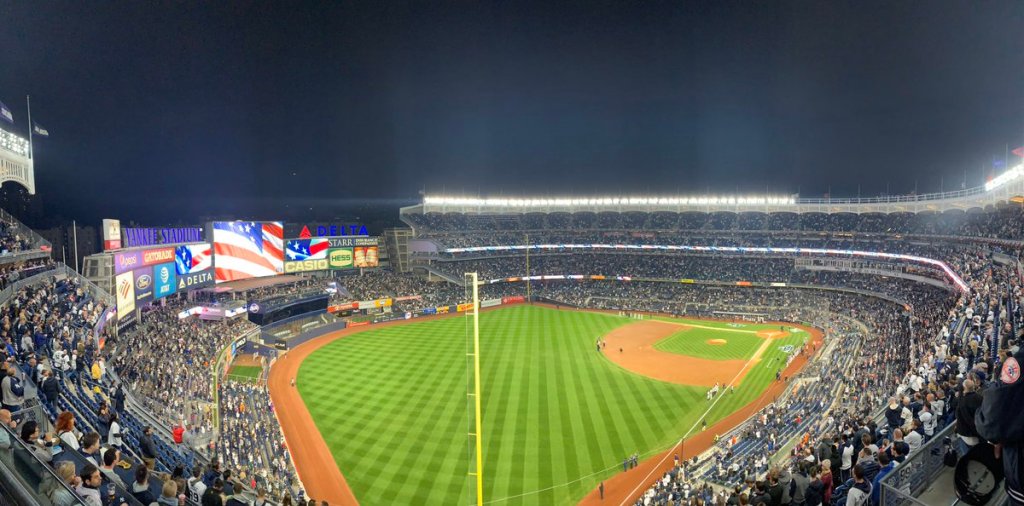
Q. What’s the level of concern for the safety of some of your outfielders playing here and have you or the organization addressed this or mentioned this to Major League Baseball perhaps? AJ HINCH: I went out on the field the other day I wanted the umpires to know that it was becoming a dangerous situation. Our guys have reported both in the bullpen and in the outfield, you could see the stuff thrown on the field. There’s no place for that. Both teams will agree. And it’s really hard to stop fans from doing that. But it’s also very dangerous. MLB is aware. We’re aware.
I will pull the team off the field if we get in that situation again where bottles are being thrown and balls are being thrown and it becomes unruly. There’s other ways to support your home team, and this place does as good a job as anybody to trying to police that while also trying to create an environment that’s all pro Yankees. It would be a very ugly scene for baseball, a very ugly seen for the Yankees, if one of our guys was hit by something from the upper deck. Something tragic could happen and nobody wants that.
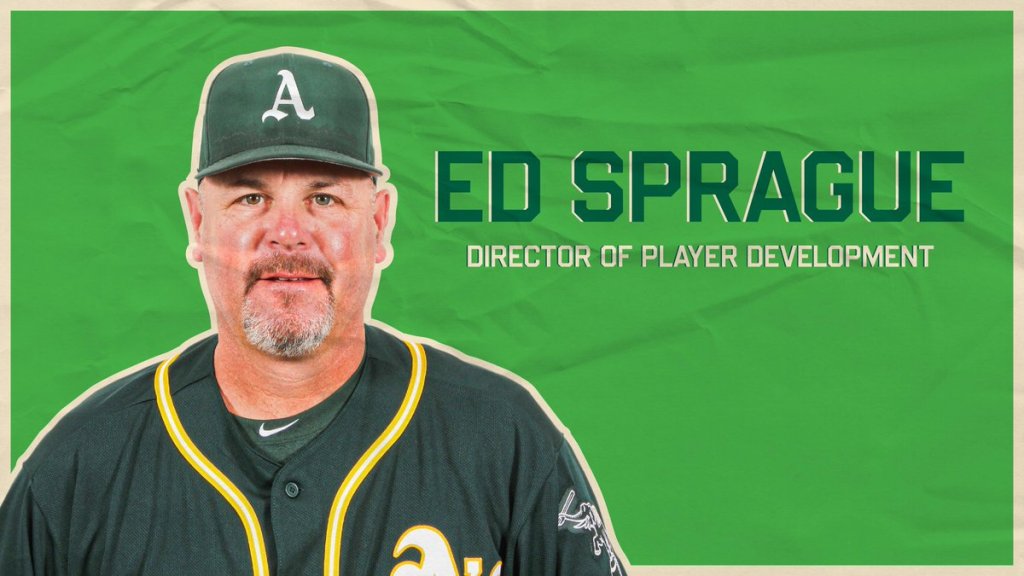
Ed Sprague Promoted to Director of Player Development
Keith Lieppman to serve 50th season with A’s as Special Advisor to Player Development
OAKLAND, Calif. – The Oakland A’s announced today that Ed Sprague has been promoted to Director of Player Development, and Keith Lieppman, who is entering his 50th season with the organization, will transition to Special Advisor to Player Development.
“The A’s are forever indebted to Keith for his leadership and his efforts on behalf of our Player Development department,” said A’s General Manager David Forst. “Keith has had an immeasurable role in every success our organization has had in the last five decades. He will remain very much involved in Player Development through this advisory role.”
“Ed Sprague brings to his new role as Director of Player Development a wealth of knowledge developed over his career as a player, coach, instructor, and administrator,” said Forst. “Ed takes the helm of a farm system that has produced Rookies of the Year, Cy Young Award winners, and MVPs in Oakland. We have confidence that, under his leadership, Player Development will continue that run of success.”
Entering his fifth season with the A’s, Sprague will transition from Assistant Director of Player Development & Coordinator of On-Field Analytics to Director of Player Development. He previously served the A’s as Instruction Coordinator from 2016-18. He will now oversee the development and evaluation of players throughout the A’s farm system, which consistently ranks among the best in the game. He will also coordinate field instruction for the entire minor league system.
Sprague previously served as head coach at the University of Pacific from 2004-15, during which time his teams posted an overall record of 250-406. During his tenure, 21 of his players were selected in the Major League Baseball Draft, with multiple players currently active in the professional ranks. He guided Pacific to one of the best seasons in program history in 2010, finishing with a 31-23 overall record that included a new program record of 31 victories over Division I opponents. In addition to his on-field success, he spearheaded the campaign to build an on-campus home field for the Tigers, with Klein Family Field opening on April 18, 2006.
After being drafted by Toronto in the first round of the 1988 draft out of Stanford, Sprague played 11 years in the Major Leagues with the Blue Jays, A’s, Pirates, Padres, Red Sox, and Mariners. He was an integral part of the Blue Jays teams that won back-to-back World Series in 1992-93 and was named a National League All-Star in 1999 with the Pirates.
Sprague and his wife Kristen reside in Lodi, Calif. They have four children: daughters Payton and Paris, and sons Jed and John.
Keith Lieppman will enter his 50th year with the A’s, including the last 28 years as Director of Player Development. Lieppman’s gilded reputation as one of baseball’s finest personnel executives was further amplified in 2010 when he received the Sheldon “Chief” Bender Award from Minor League Baseball for “distinguished service and being instrumental in player development” during his career.
Lieppman has managed at all levels of the A’s minor league system, beginning in Modesto in 1980 and most recently with the Triple-A Tacoma Tigers from 1985-87. He also managed the Licey Tigres of the Dominican Winter League in 1986. He began his baseball career in 1971 as a minor league player for the A’s.
Keith is a graduate of the University of Kansas with a degree in journalism. He resides in Prescott, Ariz., with his wife Corinne.






 The view from left field