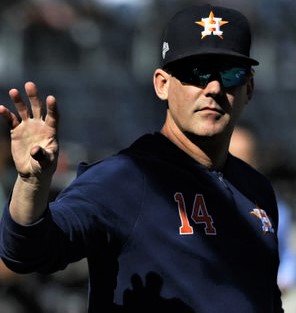
“Our guys have reported both in the bullpen and in the outfield, you could see the stuff thrown on the field. There’s no place for that. Both teams will agree. And it’s really hard to stop fans from doing that. But it’s also very dangerous. MLB is aware. We’re aware. I will pull the team off the field if we get in that situation again where bottles are being thrown and balls are being thrown and it becomes unruly.” AJ HINCH BEFORE GAME 4.


Q. What’s the level of concern for the safety of some of your outfielders playing here and have you or the organization addressed this or mentioned this to Major League Baseball perhaps?
AJ HINCH: I went out on the field the other day I wanted the umpires to know that it was becoming a dangerous situation. Our guys have reported both in the bullpen and in the outfield, you could see the stuff thrown on the field. There’s no place for that. Both teams will agree. And it’s really hard to stop fans from doing that. But it’s also very dangerous. MLB is aware. We’re aware.

I will pull the team off the field if we get in that situation again where bottles are being thrown and balls are being thrown and it becomes unruly. There’s other ways to support your home team, and this place does as good a job as anybody to trying to police that while also trying to create an environment that’s all pro Yankees. It would be a very ugly scene for baseball, a very ugly seen for the Yankees, if one of our guys was hit by something from the upper deck. Something tragic could happen and nobody wants that.


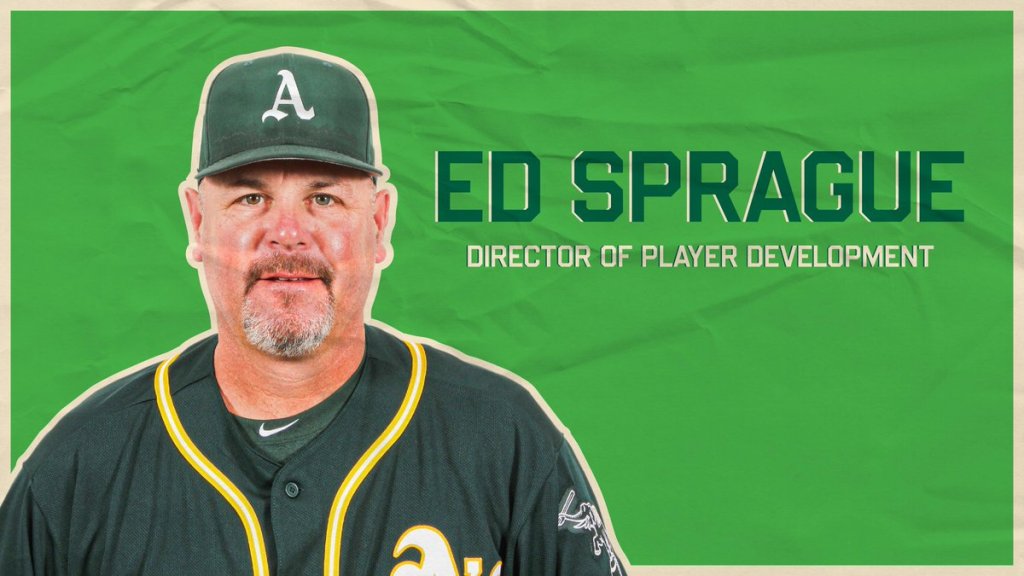
FORMER BLUE JAY ED SPRAGUE NAMED A’S DIRECTOR OF PLAYER DEVELOPMENT

https://www.mlb.com/athletics/press-release/press-release-ed-sprague-promoted-to-director-of-player-development

Ed Sprague Promoted to Director of Player Development

Keith Lieppman to serve 50th season with A’s as Special Advisor to Player Development

  • OAKLAND, Calif. – The Oakland A’s announced today that Ed Sprague has been promoted to Director of Player Development, and Keith Lieppman, who is entering his 50th season with the organization, will transition to Special Advisor to Player Development.

“The A’s are forever indebted to Keith for his leadership and his efforts on behalf of our Player Development department,” said A’s General Manager David Forst. “Keith has had an immeasurable role in every success our organization has had in the last five decades. He will remain very much involved in Player Development through this advisory role.”

“Ed Sprague brings to his new role as Director of Player Development a wealth of knowledge developed over his career as a player, coach, instructor, and administrator,” said Forst. “Ed takes the helm of a farm system that has produced Rookies of the Year, Cy Young Award winners, and MVPs in Oakland. We have confidence that, under his leadership, Player Development will continue that run of success.”

Entering his fifth season with the A’s, Sprague will transition from Assistant Director of Player Development & Coordinator of On-Field Analytics to Director of Player Development. He previously served the A’s as Instruction Coordinator from 2016-18. He will now oversee the development and evaluation of players throughout the A’s farm system, which consistently ranks among the best in the game. He will also coordinate field instruction for the entire minor league system.

Sprague previously served as head coach at the University of Pacific from 2004-15, during which time his teams posted an overall record of 250-406. During his tenure, 21 of his players were selected in the Major League Baseball Draft, with multiple players currently active in the professional ranks. He guided Pacific to one of the best seasons in program history in 2010, finishing with a 31-23 overall record that included a new program record of 31 victories over Division I opponents. In addition to his on-field success, he spearheaded the campaign to build an on-campus home field for the Tigers, with Klein Family Field opening on April 18, 2006.

After being drafted by Toronto in the first round of the 1988 draft out of Stanford, Sprague played 11 years in the Major Leagues with the Blue Jays, A’s, Pirates, Padres, Red Sox, and Mariners. He was an integral part of the Blue Jays teams that won back-to-back World Series in 1992-93 and was named a National League All-Star in 1999 with the Pirates.

Sprague and his wife Kristen reside in Lodi, Calif. They have four children: daughters Payton and Paris, and sons Jed and John.

Keith Lieppman will enter his 50th year with the A’s, including the last 28 years as Director of Player Development. Lieppman’s gilded reputation as one of baseball’s finest personnel executives was further amplified in 2010 when he received the Sheldon “Chief” Bender Award from Minor League Baseball for “distinguished service and being instrumental in player development” during his career.

Lieppman has managed at all levels of the A’s minor league system, beginning in Modesto in 1980 and most recently with the Triple-A Tacoma Tigers from 1985-87. He also managed the Licey Tigres of the Dominican Winter League in 1986. He began his baseball career in 1971 as a minor league player for the A’s.

Keith is a graduate of the University of Kansas with a degree in journalism. He resides in Prescott, Ariz., with his wife Corinne.

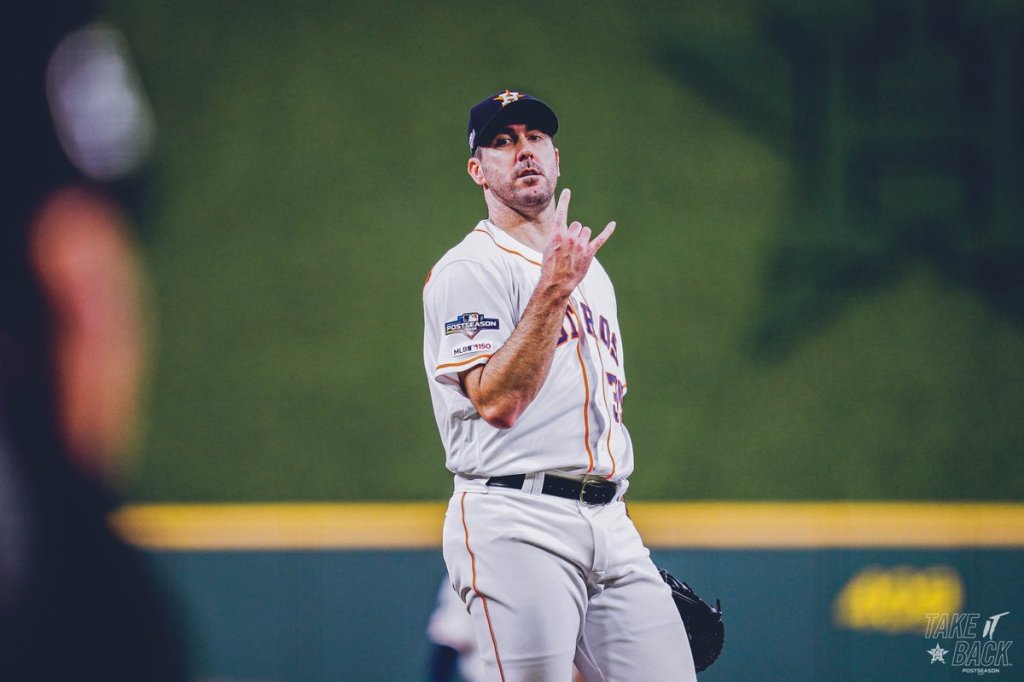
Zack Greinke has allowed 3 earned runs-or-fewer in each of his past 4 LCS starts (since 2011), going 1-2 with a 3.04 ERA (9ER/26.2IP) in those games.

POSTSEASON W-L ERA G GS IP H R ER BB SO

2019: 0-2 8.38 2 2 9.2 12 9 9 1 11

CAREER: 3-6 4.58 13 13 76.2 72 42 39 16 70

LAST START – 2019 ALCS Game 1 vs. NYY: started Game 1 of the ALCS in Houston and took the loss despite tossing a quality start…gave up 3 runs on 7 hits (2 homers) over 6.0 innings pitched…struck out 6 with no walks…marked his most innings pitched in a postseason game since Game 5 of the 2015 NLDS vs. NYM (6.2IP)…suffered his 4th-consecutive losing decision in the postseason.

• took the ball in Game 1 of a postseason series for the 3rd time in his career…also Game 1 of the 2013 NLCS at STL and Game 1 of the 2011 NLCS vs. STL.

GREINKE IN THE POSTSEASON: the 6-time All-Star and former Cy Young Award winner is set to make his 14th-career start in the postseason, and his 3rd of the 2019 postseason.

• started Game 3 of the ALDS at TB and Game 1 of the ALCS vs. NYY.

• prior to 2019, all 11 of his postseason appearances had come as a member of the National League.

IN THE LCS: is starting his 6th career game in the League Championship Series…started Games 1 and 5 of the 2011 NLCS vs. STL while with the Brewers, and Games 1 and 5 of the 2013 NLCS vs. STL while with the Dodgers.

• has allowed 3 earned runs-or-fewer in each of his last 4 LCS starts (since 2011), going 1-2 with a 3.04 ERA (9ER/26.2IP) in those games.

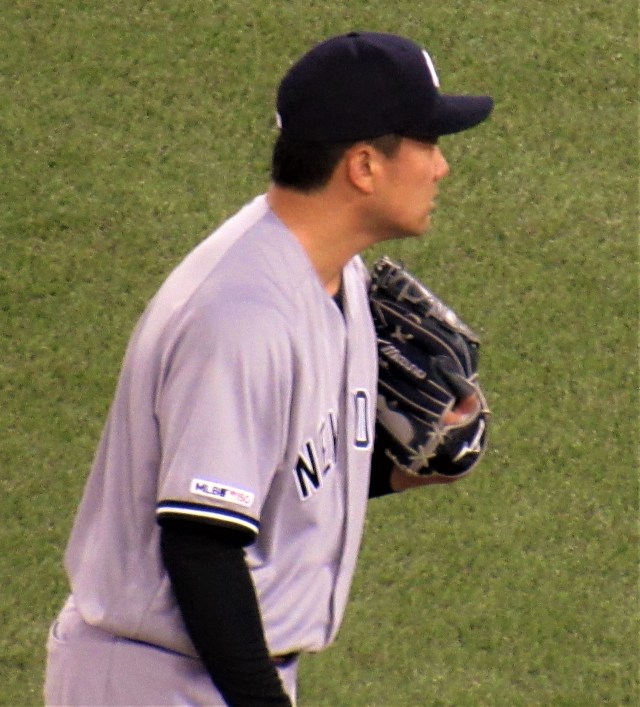
In seven career postseason starts (two in 2019, one in 2018, three in 2017, one in 2015), Tanaka is 5-2 with a 1.32 ERA, the Majors’ second-lowest postseason ERA among starting pitchers (min. 7GS) since earned runs became an official stat in 1912, trailing only Sandy Koufax (0.95)…

RHP Masahiro Tanaka

2019 POSTSEASON: Is 2-0 with a 0.82 ERA (11.0IP, 1ER) in two postseason starts in 2019…earned the win in the Yankees’ 8-2 victory in ALDS Game 2 vs. Minnesota on 10/5 at Yankee Stadium (5.0IP, 3H, 1ER, 1BB, 7K, 1HP)…allowed his only run on an RBI single to Mitch Garver in the fourth.

CAREER POSTSEASON: In seven career postseason starts (two in 2019, one in 2018, three in 2017, one in 2015), is 5-2 with a 1.32 ERA (41.0IP, 21H, 6ER, 9BB, 36K, 3HR)… has the Majors’ second-lowest postseason ERA among starting pitchers (min. 7GS) since earned runs became an official stat in 1912, trailing only Sandy Koufax (0.95)… is fifth-lowest among all pitchers with at least 40.0IP, trailing Mariano Rivera (0.70), Koufax, Stephen Strasburg (1.10) and Christy Mathewson (1.13)…according to Elias, is the fi rst pitcher in Major League history to allow 2R-or-fewer in each of his first seven postseason starts, surpassing Sandy Koufax (first six starts from 1959-65)…has also allowed 4H-or-fewer in all seven.  Is the first pitcher to make a start in four consecutive Yankees postseasons since CC Sabathia started in four straight from 2009-12.  Has won each of his last four postseason starts (since 2017 ALCS Game 5), posting a 0.78 ERA (23.0IP, 2ER) in those games…is the fi rst Yankees pitcher to win four consecutive postseason starts since Andy Pettitte won four straight from 2009 ALCS Game 6 to 2010 ALDS Game 2…the last Yankees pitcher to win at least five consecutive postseason starts was Orlando Hernandez (1999 ALCS Game 5 to 2000 ALCS Game 6).  In three career ALCS starts (both against Houston), is 2-1 with a 0.95 ERA (19.0IP, 2ER) and 15K.  Earned the Yankees’ only win in the 2018 ALDS vs. Boston, allowing 1ER in 5.0IP (3H, 1BB, 4K, 1HR) in Game 2 at Fenway Park.  Was 2-1 with a 0.90 ERA (20.0IP, 10H, 2ER, 3BB, 18K, 0HR, 2WP) in three postseason starts in 2017…was the second-lowest ERA by a Yankees starter in a single postseason (min. 3GS), trailing only Waite Hoyt’s 0.00 ERA (27.0IP, 2R/0ER) in 1921…tossed 7.0 scoreless innings in both ALDS Game 3 vs. Cleveland and ALCS Game 5 vs. Houston…became the second Yankee to record two scoreless starts of at least 7.0IP within his fi rst four career postseason appearances (also Orlando Hernandez in 1998-99).  Took the loss in the 2015 AL Wild Card Game vs. Houston (5.0IP, 2ER).

Tanaka will make his eighth career postseason start in tonight’s ALCS Game 4 vs. Houston…the 30-year-old will pitch on regular four days’ rest…last started in ALCS Game 1 at Houston and earned the win, allowing only 1H over 6.0 shutout innings (1BB, 4K) )…went 11-9 in 32 games (31 starts) during the 2019 regular season, becoming the second pitcher in Yankees history to reach double-digit wins in each of his first six Major League seasons (also Andy Pettitte, who did it in each of his fi rst nine campaigns from 1995-2003)…is one of six pitchers with at least 10 wins in each of the last six seasons…is one of three pitchers in Yankees history to make at least 20 starts in each of his fi rst six Major League seasons, joining Fritz Peterson (first eight, 1966-73) and Andy Pettitte (first nine, 1995-2003)…the two-time AL All-Star (2014, ’19) earned the win in this year’s Midsummer Classic…is 75-43 (.636) in 164 career regular season games (163 starts), tied for the eighth-best winning percentage among active pitchers (min. 75 decisions)…his 4.74 career K/BB ratio (947K, 200BB) is the fourth-highest (min. 700.0IP) in the Modern Era (since 1900)…recorded his 900th career strikeout on 7/25 at Boston (J.D. Martinez swinging in the fourth)…has 174 career regular season wins between MLB (75) and NPB (99)…his 75 MLB wins are third-most among all Japan-born pitchers (Hideo Nomo-123, Hiroki Kuroda-79)…was acquired by the club via the posting system from the Tohoku Rakuten Golden Eagles of Japan and signed to a seven-year contract on 1/22/14…his contract runs through the 2020 season.

“Today I feel like (Stanton) was better. And probably for the first time, like, saw some improvement today. Whether he’s running at 60 percent or whatever, don’t feel like he’s ready to be an option in the field for us. I think there’s a possibility of that kind of DH role now. So it’s a little bit of a decision for me.” –Aaron Boone

October 17, 2019

Aaron Boone

New York, New York – pregame 4

Q. Hicks has only taken three at-bats in the postseason. Can you talk about a little bit what went into the decision of having him hit today.
AARON BOONE: Well, he started the other day and had an at-bat in Game 2. So I think he’s had maybe five or six now.

I just like what I’ve seen. I feel like it’s very Aaron Hicks type of bats, as far as controlling the strike zone and his normal discipline. And just like him up in that spot as a guy that can potentially get on base a bunch and create traffic there at the top of the order. And with having, again, three lefties in there tonight, just trying to keep the proper spacing as far as spacing our lefties and righties.

Q. Stanton was testing out his leg earlier today. What did he tell you? With him not being in the lineup, what does that mean going forward?
AARON BOONE: Today I feel like he was better. And probably for the first time, like, saw some improvement today. Whether he’s running at 60 percent or whatever, don’t feel like he’s ready to be an option in the field for us. I think there’s a possibility of that kind of DH role now. So it’s a little bit of a decision for me.

He certainly wants to be in there but I thought today overall was encouraging as far as taking a little bit of a step forward, and do feel like he’s more of an option now. And again, he’s an option off the bench for us certainly as a hitter.

Q. You’ve been very aggressive with your bullpen so far this postseason. Does the way you manage it change at all knowing that you could potentially be playing four straight games?
AARON BOONE: As I think I’ve said, we’ve got to get certainly some innings out of our starters, and feel like we have that capability with Masa and certainly Paxton tomorrow. So hopefully they’ll be able to give us some quality innings and set a good tone for us.

That said, we’re going to do all we can to win and our bullpen is still going to play a big role in that and feel like all those guys are ready and loaded to go.

Q. You have a number about of guys in your lineup that didn’t get to play a lot in September because of injuries. Are you seeing, do you think, in the postseason the challenge for some of those guys of trying to hit against some of the best pitching in baseball when you were not playing?
AARON BOONE: You know what, I feel like — so you’re asking about rust a little bit?

Q. Yeah, timing.
AARON BOONE: I don’t feel like that’s so much an issue. We’ve played six games now in the postseason. We’ve had four really good offensive games and two where with Verlander and Cole starts where we struggled to score runs, although had a fair amount of opportunities. So you know this time of year it’s going to be more difficult, especially when you’re up against an opponent that can pitch like the Astros.

But I feel like our guys are in a pretty good place and don’t feel like rust is playing a huge role in us being held down a little bit the last two games.

Q. A couple of the Astros players mentioned to us, everything they do takes on a different feel when Altuve is producing. Do you notice that in the opposing dugout? And what makes him so tough to deal with in the postseason?
AARON BOONE: I mean, he’s kind of an MVP candidate-caliber players, and they have a few of those guys. So their top of the order is a load and you know that you have to make quality pitches if you’re going to have a chance to hold them down.

And Jose is one of those guys that can certainly change the game with his bat-to-ball skills but also his power. That’s a factor if you make a mistake, as we saw in Game 3. So he’s somebody that you’ve obviously got to pitch carefully to and pitch smartly to and certainly be aware of.

Q. Paxton was in here and he said that looking at video, whatever you guys did, he felt that wasn’t tipping pitches in his first outing. What’s the process of that and what do you guys look for to see if he was or he wasn’t?
AARON BOONE: It’s just part of something we do all season long. We’re confident that we’re buttoned up in a lot of ways and I’m not really — I really don’t think it’s much of an issue.

Q. When you say that Giancarlo is an option on the bench. Are there situations that you already have in mind where that would come into play? Obviously to use him in the field, it’s a two-person change at that point.
AARON BOONE: Yeah, there’s a couple of scenarios where I could envision him playing a role, absolutely, yeah.

Q. This is the first time that you’re trailing in a series in the postseason. How do you expect your ball club to respond?
AARON BOONE: Well, we’ve got a tough group, a focused group, and a group that I feel like all season long whatever we’ve been going through in the course of the year has been really good at rolling with whatever happened previously and coming in as a new day with that right kind of edge and focus and hunger. That’s what I’ve loved about this team all year, and we get a chance to hopefully answer that again tonight.

Q. I know you’ve been getting asked the last couple of days a lot about tipping and signals and whatnot, and your response has been it’s part of the game, you guys stay on top of it. Are there boundaries to how that kind of information is shared when teams pick up on that kind of thing?
AARON BOONE: Sure, there’s boundaries. Yeah. We could have a conversation for days on that. So, yeah, there’s boundaries. There’s things you’re not allowed to do and things that are perfectly within the context of the game. So, yeah.

Q. When you say Stanton may be available going forward in the DH and not the outfield, is it because there’s some quick stops and different types of turns in the outfield because you have to run both? Why could he hit and not play outfield?
AARON BOONE: I think outfield is still potentially in play moving forward, not yet. I would not feel great about throwing him out there yet in the outfield, and especially here in a big left field. When we get to Houston, temperature control, obviously a smaller left field, that may change a little bit.

But I think you’re talking about a defensive position where you’ve got to be able to move and make plays whereas offensively you’re banking more on the bat and the quality of the at-bat and the ability to kind of hopefully run in a controlled manner and you know what that’s going to look like. Whereas in the outfield, you’ve got to go catch a ball or make a play and you’re going to be limited and I think that’s a little bit different.

Q. With all the anticipation going into the series, through three games, has it played out as you expected or has anything surprised you from what you’ve seen so far from either team?
AARON BOONE: I was hoping we’d be up at this point. But, yeah, I think it’s been — we had a really good first game where we took control. Obviously a little bit of a back-and-forth kind of pitcher’s battle, extra innings in Game 2 and then they got an early lead and were able to hold on to it in Game 3.

I think we all anticipate this being a tough series that could kind of go either way. So far they’ve got the upper hand that hopefully we can even things up tonight.

Yeah, I guess so.

FastScripts Transcript by ASAP Sports

ASAP sports

“We’ve had a strong rotation the entire season. We’ve got more guys than JV and Cole. But it’s led to this hundred-plus win team and where we’re at, and the series lead in the ALCS. But having those two horses is a huge competitive advantage for us going into any series or any game or anything of that nature.” –AJ HINCH

October 17, 2019

AJ Hinch

New York – pregame 4

Q. What do you think of the allegations you guys were doing whistles to gain some kind of advantage?
AJ HINCH: Man, I’m glad you asked that question, and I thought it would come up today. And we talked about this the other day. And in reality it’s a joke. But Major League Baseball does a lot to ensure the fairness of the game. There’s people everywhere. If you go through the dugouts and the clubhouses and the hallways, there’s like so many people around that are doing this.

And then when I get contacted about some questions about whistling, it made me laugh because it’s ridiculous. And had I known that it would take something like that to set off the Yankees or any other team, we would have practiced it in Spring Training. And we would have got — it apparently works, even when it doesn’t happen.

So to me, I understand the gamesmanship. I understand kind of creating a narrative for yourself or wondering how things are going.

Now, the game in question, you know, we got three hits and no runs. And so nobody heard it. You guys have audio, video, people in places and nothing — and there’s no evidence of anything.

So to the Yankees, there’s no — nothing bad going on. Pitch tipping is a little bit of a different story. If you don’t want us to know the pitch is coming, don’t do something that demonstrates what pitch you’re going to pitch or what you’re going to throw. But they’re doing the same thing.

Every hitter wants to know what’s coming by virtue of what a pitcher is doing or not doing.

The problem I have is when other people take shots at us outside this competition. When you guys ask me this question, my face, my name is by my quotes, my opinions, my reaction is all for you guys to Tweet out and put on the broadcast. But we have people that are unnamed, or you guys have sources that are giving you information. I suggest they put their name by it if they’re so passionate about it to comment about my team or my players.

There’s nothing going on other than the competition on the field. The fact that I had to field the question before a really, really cool game at Yankee Stadium is unfortunate. But we can put it to rest. That will be the last question I answer about pitch tipping or pitch stealing.

Q. There are 15 pitchers who threw 200 innings this season, 5 are still in the playoffs. Only one is with his original team, Strasburg. Do you think the success you’ve had, success the Nationals have had, is going to lead to teams trying to develop starting pitching that can go 200 innings as opposed to trying to acquire it as a free agent on the trade market?
AJ HINCH: Any time you can do it within your own organization it’s good. But that doesn’t mean that it’s the only way to do it.

In a perfect world the pitchers you draft and develop are in your system from the very beginning, are your horses. It’s not always the way it works out.

So I think teams are trying to do that anyway. It’s just the fact that the Nats have been able to hold on Strasburg, that’s a credit to them and their system. But there’s so much activity that goes on in players’ careers, in the movement in the industry nowadays, that doesn’t always work out that way.

I think teams have been trying to do that for a long time. And some teams are better than others. But when you get to building your team and you’ve got to go outside your organization to get the guys that help you win the World Series, then that’s what you’re willing to do.

Q. Whenever the Yankees talk about the series, they always talk about having to beat either Justin or Gerrit in the series. What does it mean to a team to have that kind of wall, to have them at the front of the rotation?
AJ HINCH: We’ve had a strong rotation the entire season. We’ve got more guys than JV and Cole. But it’s led to this hundred-plus win team and where we’re at, and the series lead in the ALCS. But having those two horses is a huge competitive advantage for us going into any series or any game or anything of that nature.

There’s other ways to win the series for us. We don’t have to just rely on those two. Tonight is a good example where Zack can go out and throw very well. He’s got a back of the baseball card that’s pretty impressive as well and can make it really difficult on them if we can continue to separate ourselves in this series.

There’s a ton of confidence when all of our guys are starting the game, but clearly when we have Greinke and Verlander and Cole, it’s one of the best trios in baseball.

Q. Two disparate questions for you. Back to Greinke; what’s it been like having him around and what relationship have you been able to develop with him?
AJ HINCH: It’s been great to have Greinke, when he got to Houston right after the deadline we immediately embraced him and kind of introduced him to what we do and how we game plan.

It’s funny, the first game that he had was against the Rockies, so he was right back into the NL West. And I was really worried about him having to pitch against a team that had so much familiarity with him. I was hoping when we got him part of the advantages that a lot of teams in the American League hadn’t seen a ton of him in recent years. And so I apologized to him that, man, your first start is going to have to be against the Rockies. No, he said, it’s okay, I’ll get to see if you know what you guys are talking about. He was quizzing us as much as we were quizzing him. So that relationship developed over game planning against the Rockies.

As I’ve said before, it’s kind of a match made in analytical heaven. He’s a brilliant guy with a real good feel for pitching. And we know what we’re doing with Strommy and Josh Miller and our analytical department. Hopefully this is something that we get a lot of innings out of him and a lot of wins out of him.

Q. I did a column about this a couple of weeks ago. You guys went a whole with season without an intentional walk. Do you think that’s a tactic that’s going away in baseball, because it’s diminishing all over the place?
AJ HINCH: Yeah, I think it’s diminishing a little bit, but I think it’s all circumstantial. There’s always a time when it’s important to do that. It’s not a bad play. I’ve tried to stay away from the bad ones where it doesn’t make a lot of sense or it doesn’t give you a better chance to win and it’s just a move to make a move because we’ve been taught in this game over the years that when there’s an open base and you have a chance for a double play that you should intentionally walk that guy and in reality it’s not always a good play.

I’m also in the American League, so we don’t have as many National League games as everybody else. I’d be curious to know if the DH is ever put all around baseball, if we see it diminished even more, because you don’t have the built-in eight hole hitter to the pitcher scenario that comes up in the National League.

It’s a play that I’m going to use again. And I think there’s always a place for it. I might even do it tonight. Hopefully I don’t have to but you guys will have something to write for the next time I do it because I’m sure I’ll get asked about it if I ever do it again.

Q. What’s the level of concern for the safety of some of your outfielders playing here and have you or the organization addressed this or mentioned this to Major League Baseball perhaps?
AJ HINCH: I went out on the field the other day I wanted the umpires to know that it was becoming a dangerous situation. Our guys have reported both in the bullpen and in the outfield, you could see the stuff thrown on the field. There’s no place for that. Both teams will agree. And it’s really hard to stop fans from doing that. But it’s also very dangerous. MLB is aware. We’re aware.

I will pull the team off the field if we get in that situation again where bottles are being thrown and balls are being thrown and it becomes unruly. There’s other ways to support your home team, and this place does as good a job as anybody to trying to police that while also trying to create an environment that’s all pro Yankees. It would be a very ugly scene for baseball, a very ugly seen for the Yankees, if one of our guys was hit by something from the upper deck. Something tragic could happen and nobody wants that.

Q. You’ve been very vocal about your trust in Yordan Alvarez and you’ve said he’s going to play a big part. How difficult is it for a manager to balance that faith in that player and that confidence between every at-bat with a player that’s struggling maybe a little bit in the ALCS and having that faith moving forward?
AJ HINCH: No, I don’t think it’s that hard when you know the talent that’s there, the work that’s being put in and the near misses. I know we can look at the results of the at-bats and often give our opinion based on how that at-bat went, based on what happened, whether he chases a last hit and punches out or maybe guesses wrong and ends up taking a strike that he normally would swing at or puts a ball in play where a guy’s throwing 99 miles an hour and happens to get in on him little bit.

So for me I’ve always asked my players to maintain that balance. I maintain that balance. I’ve got a history of sticking with our guys that I trust and believe in. I have moved him down in the order and put Yuli behind Bregman because they’re dancing around Bregman a little bit. Maybe that gives Yuli a chance for some of these line drives start to fall.

But I trust him. He’s one swing away from changing the scoreboard. That’s very impactful, especially in October. The more he gets challenged the more that I believe he’s going to be a pivotal player in helping us to win another game.

Q. Greinke is pitching right here at Yankee Stadium. When he took the field did you think there was no way that a trade would be made because he started that game?
AJ HINCH: Well, we didn’t take the field. We were in Cleveland and we were playing a night game. It was a day game here. There was a lot of rain and so once I saw Zack get on the mound and start the game, I was in my office in Cleveland and I immediately was a little frustrated. I was pissed that means the trade — there’s no way they’re pitching him and then going to trade him. My history in the game it doesn’t happen very often. It’s happened a couple of times. For the most part those talks are quieted once that player plays in that game because there’s a chance of injury. There’s a chance for something to happen.

So I knew we were talking to him and talking about him. I immediately just kind of watched the game, and the rain delay came and there was just a lot going on. Jeff was in contact with me. And then right as the deadline was approaching is when Jeff contacted me and said that we got Greinke. I went through a range of emotions, pretty excited that he was in consideration for us to pretty depressed that he was starting at Yankee Stadium, and I’m watching it in front of my eyes. It shouldn’t be real, he should be an Astro, to quite surprised that we were able to pull it off at the very end with the way the day went.

So it was a unique day to say the least.

FastScripts Transcript by ASAP Sports
ASAP sports

“If we’re going to win this series, our bullpen will still play a huge role, obviously. But we’ve got to be able to get a little bit of distance out of our starters probably if we’re going to ultimately be successful in these next several games.” –Aaron Boone

October 16, 2019

Aaron Boone

New York – Workout Day

Q. I was wondering what does your lineup look like for tomorrow and what does the rest of your pitching rotation look like for the rest of the postseason in this ALCS?
AARON BOONE: I have not settled on the lineup yet. That will be something we talk about today and possibly even into tomorrow.

As far as rotation goes, will be Tanaka tomorrow in Game 4, with likely Paxton then in Game 5. And then we’ll see where we’re at from there.

Q. Through your career as a former player, as an analyst, and now as a manager, is there something you’ve seen as a common thread in pitchers who are very successful in the postseason the way Tanaka has been?
AARON BOONE: Command and the ability to ultimately command your repertoire of pitches. In a starter’s case typically we’re talking three or more pitches. And Masa clearly has that and the ability to put the ball where he wants, the ability to not make any kind of a moment or start bigger or less than it is but having that ability to kind of really focus on pitch to pitch. And I think the guys that do that the best give themselves the best chance to be successful. And Masa has clearly demonstrated the ability to do that.

Q. Do you think that’s just part of his temperament?
AARON BOONE: Everyone’s a little bit different. There’s been guys across the history of the game that have had tremendous success with kind of different personalities. Some guys are very detail oriented, very meticulous with how they go about things to guys that are very intense or a little more fly by the seat of their pants. There’s no one way that is the ultimate way to be successful.

But Masa I think is a guy that is obviously very good at his craft, very meticulous, and understands his mechanics and his delivery about as good as anyone. And I think those things lead to him going out there with a lot of confidence.

Q. Gleyber’s at-bats against Gerrit were some of the best your team had last night. What impresses you about the way he’s able to control the at-bats even against a great pitcher like that?
AARON BOONE: I mean, that. He’s been so locked in and I think Gleyber clearly likes playing in these kind of games when it really matters. He has a lot of confidence in his ability. But I think the biggest thing is he’s not — he’s controlled the strike zone. He’s not up there, I’ve got to do something great here. And against these pitchers that are really good and the best at what they do, you’ve got to be able to control those situations even in the big moments.

And I think Gleyber has done a great job of that, and especially some big counts where a lot of times you get guys that will chase. He’s done a really good job of slowing it down. I think disciplining himself not only within the at-bats but before the game, I’ve just got to really focus in on winning pitches. And he’s done a great job of that.

Q. Can you give us an update on Stanton’s status and do you expect him to be in your lineup tomorrow night?
AARON BOONE: I have not seen him yet today. I’ll probably go from here actually and see how his treatment and everything goes today. I’m not sure. I’m not really close to making that decision yet. That will be something that we kind of work through today and possibly even into tomorrow before I make that decision.

Q. How much longer can you go with a 24-man roster in this series?
AARON BOONE: That will be another conversation. And even though G hasn’t been able to go yet, I did view him as a potential option off the bench in a hitting situation if we like something. So I don’t look at it as we’re entirely 24-man right now. I do believe we have his bat off the bench right now. And whether a situation for that arises, we’ll see. But we’ll continue to evaluate this as smartly as we can moving forward.

Q. In terms of Aaron Hicks, obviously he hasn’t played fully since August. What did you see from him last night that were some encouraging signs? Obviously he had the two walks and honestly looked very poised for someone who hasn’t played in two months.
AARON BOONE: Zone control, which is one of his overwhelming strengths is his ability to control the strike zone. Even throughout the year when he’s not at his best or swinging his best, he always does a good job of controlling the strike zone.

And it’s been really nice to see him here and obviously getting a full game of at-bats yesterday, coming in for an at-bat in Game 2. You always wonder what it’s going to look like when a guy hasn’t really seen live-game action in about a couple of months, what that’s going to look like. And he hasn’t missed a beat. He looks exactly like Aaron Hicks.

I thought his at-bats yesterday were excellent. I do think Aaron is one of those guys that the more you’re playing for, the sharper his focus is and the better he is. I think he relishes playing in these games. There’s a fearlessness to which he plays the game, and there’s a confidence in his ability that he knows he’s going to go up there and swing at strikes.

Q. Would Giancarlo’s status for Game 4 affect Aaron Hicks in the lineup?
AARON BOONE: I don’t know that yet. My feel right now is that Aaron will probably be in the lineup some way, shape or form. But, again, it’s not something I’ve finalized yet.

Q. You said likely for Paxton. Under what circumstances wouldn’t he pitch?
AARON BOONE: He’s going to pitch. I mean, I guess if something got really crazy in a Game 4 scenario, but he will — I plan on him pitching Game 5. We’ve prepared him for that. He threw a side yesterday so that’s our thought.

Q. I know you touched on it a little bit yesterday but why do you think Ottavino has struggled this postseason, and will you change the way you use him because of those struggles?
AARON BOONE: I still think he’s got to play an important role for us, especially against this Houston lineup that a lot of their great players are right-handed hitters. And just the way we’re built and set up, he’s going to have to still get important outs for us. I still feel like he’s capable of that.

I don’t think this is a situation where the moment or the playoffs or anything. I feel like he has the right mindset. I feel like he has confidence, he’s just struggled a little bit with his command. I thought last night was a good example of coming in, and obviously a tough spot in the lineup when you’re facing the top of the order there. And I felt like he was in the midst of having a good start to that inning with Springer where he got ahead of him 1-2, made some really good pitches, and then didn’t make a few good pitches where he ends up walking that leadoff hitter, which really obviously hurt him.

So I do feel like he can get back on track and I don’t feel like he’s that far off, but he’s got to find a way to command his pitch and really be able to dictate counts. And if he does that, he’ll be successful.

Q. What gives you that confidence that he’s going to be able to find the command at this point in the season?
AARON BOONE: Because, again, I do believe in the person and where he’s at. Again, I don’t think he’s — I don’t think he’s overwhelmed by the playoffs or all that goes into how we assess performance sometimes in this. I think it’s a question of he hasn’t executed great. And at different times for as great a year he’s had this year, sometimes the command gets away from him and that’s where he’s gotten in a little bit of trouble, which has certainly hurt him here a little bit in the postseason.

Q. You’ve shown that you’ll be aggressive in going to your bullpen in this postseason. With the possibility of four games in the next four days if this series goes the distance, how much longer of a leash do you anticipate having with your starters?
AARON BOONE: I mean, we’re going to have to get some innings out of our starters, there’s no question about it. So hopefully — obviously Masa is coming off a real good start in Game 1 where he was able to give us six innings. So between him and Paxton these next two days, they’re going to need to give us some innings if we’re going to be successful.

But again, you’re kind of — we’ve got to go out and win a game. So I’ll be aggressive in that sense but we do have to get some bulk innings out of some people, there’s no question.

Q. You were asked yesterday about the possibility of removing Sanchez from the lineup for Romine, and you answered very quickly and very emphatically no. What gives you confidence that he can break through?
AARON BOONE: Say it again.

Q. What do you see from Sanchez and his at-bats that give you confidence that he can break through?
AARON BOONE: Let’s start with the other side of the ball, which completely gets lost in this. And without sugarcoating at all, he’s been excellent behind the plate from a game calling standpoint, from a game plan target, receiving. A lot of people are making a lot of the block. There’s a lot of 94-mile-an-hour fastballs that guys don’t block. Guys aren’t always set up to block a fastball. That’s kind of a 50/50 play.

The bottom line is his body of work in this postseason, and frankly down the stretch in the second half of the season defensively, has been excellent. So that part has me feeling really good about him. And just knowing how talented of an offensive player he is, I always feel like he’s a pitch away or an at-bat away from really getting locked in and changing the course of a game.

So clearly he hasn’t been at his best offensively but with a guy as talented as he is, I think that’s right around the corner always.

Q. You were talking about getting some length from your starters. I guess what’s the challenge for you going forward here wanting to get that length but also understanding where the series is right now down 2-1? How do you manage the balance of getting length out of your starters but also not sticking with them for too long?
AARON BOONE: Yeah, that’s the line you’re walking all the time. If we’re going to win this series, our bullpen will still play a huge role, obviously. But we’ve got to be able to get a little bit of distance out of our starters probably if we’re going to ultimately be successful in these next several games.

So that’s the balance you’ve got to try and strike, and we’ll do it the best we can.

Q. You’ve had Tanaka a couple of years now, and each of his regular seasons have kind of been up and down. Does he just look like a different pitcher in the postseason? Because you’ve seen him obviously very good in the postseason back-to-back years.
AARON BOONE: Yeah, I don’t know if it’s so much different because I feel like we see this guy, or I have, a lot in these last couple of years. I feel like last year in the second half of the season he really got it going. This year I feel like has been mostly good. He’s had a couple of clunkers along the way that have kind of distorted his overall line from an ERA standpoint and whatnot.

But I feel like mostly this year, especially in a year where he was a little bit inconsistent with his split finger, I feel like he’s thrown the ball mostly really well, and we’ve seen outings like he had the other night throughout the season.

So it’s definitely the good version of Masa that I’ve gotten to see in the postseason but it’s also a version that I’m not surprised by and I feel like we’ve seen a good amount in the regular season, as well.

Q. Going back to S�nchez for a minute, we asked him I think in Houston if kind of the time that he missed with the injury, the sporadic playing time towards the end, if that threw him off going into the playoffs. He said that wasn’t the case. Do you see signs of that, of him trying to get up to speed and that’s why you think it might be around the corner because it’s been a bit of a process or does that not have anything to do with it?
AARON BOONE: I think that’s certainly possible. And that’s a question you get asked a lot or I get asked a lot is when a guy is coming back how long is it going to take to get back into the full swing. And hitting is fickle like that. Hitting is hard. Like we’ve seen with Aaron Hicks, he’s out a couple of months and kind of looks like he hasn’t missed a beat with the quality of his at-bats. Sometimes you kind of lock it right back in right away. Other times it takes a little while to find that consistency.

It’s hard to really predict, frankly. All you can do is get guys ready and prepared the best you can and hope that their talent goes out there and gets it done for them.

But I feel like Gary has been back long enough now to certainly be in the flow and the rhythm of regular play. Again, hopefully this starts real soon for him.

Q. As a manager when you get into these tight spots in the playoffs, what’s the kind of line that you walk between riding with your guys but also trying to make the hard decisions to do what’s right for this team?
AARON BOONE: Right. I mean, those are always the decisions. The reality is you have to get the 27 outs. Guys that are throwing the ball incredibly well and kind of locked in are going to be — but you’re going to have to lean on guys, too, that maybe are going through a tough time that have to step up and get you big outs if you’re going to move forward. And I consider Otta one of those guys.

Q. What’s your comfort level and confidence level if you have to use a reliever three or four days in a row? Would you do it? And what is your belief about them being effective and efficient on a third or fourth straight day?
AARON BOONE: Yeah, I think I definitely would do it. Now, that’s a case-by-case basis and depends on the individual. I would certainly be prepared to do that but we’ve also got to take into consideration where the guy is coming in each day. The reality is he may throw an inning or more than an inning and may come in and actually not be available.

So you’re kind of measuring where they’re at physically, trying to have that open quality dialogue with them and myself and Harkey and Larry and where they are, and trying to make good evaluations. So I’m certainly open to them running out there every day but it’s something that’s kind of always fluid with the different individual pitchers and how they’re able to bounce back.

FastScripts Transcript by ASAP Sports

ASAP sports

“It was our plan if this (the rainout Wednesday) happened. It’s Zack’s normal day, he was going to pitch on Thursday no matter what it was. JV on regular rest in Game 5. As soon as we can use our best pitchers the better for us. It was an easy decision.” — AJ Hinch.

October 16, 2019

AJ Hinch

New York, New York – Workout Day

Q. How beneficial is this?
AJ HINCH: You know what, it gives everybody a day off and kind of an opportunity to collect ourselves before Game 4. It changes our pitching a little bit.

How beneficial it is is probably easier to answer after I see how guys perform and how the pitching plays out. But like I said, it’s kind of a wait and see. But it does solidify who we start in Game 4 and Game 5 without having to go to a bullpen game.

Q. Is that a pretty easy decision, Verlander and Greinke on their normal rest?
AJ HINCH: Yes, very easy for us. It was our plan if this happened. It’s Zack’s normal day, he was going to pitch on Thursday no matter what it was. JV on regular rest in Game 5. As soon as we can use our best pitchers the better for us. It was an easy decision.

Q. How do you feel about how the series stands right now? Up 2-1, 2 potential games at home, you still have Greinke, Verlander, and Cole all set to start if needed.
AJ HINCH: I see it as an opportunity for the next game. I know there’s a lot of what-ifs. Now that our pitching is set for the next couple of nights, we know we’re going to have pretty good weather based on the forecast. But I think it’s also important for us not to look too far ahead of Game 4. We know we’re going to face Tanaka.

It’s an important game. Every game is magnified as you get deeper and deeper. Very disciplined, only care about the next game, and that’s what we’re focusing on.

Q. (INAUDIBLE.)
AJ HINCH: We’ll look at it based on how the games play out. But we haven’t even played game one of a potential four-game stretch. Right now our goal is to win the next game. But we play four games in a row all the time during the season. From the beginning of this stretch — we do it all the time. It’s something that players are equipped to handle from the very beginning. But it’s really a non-topic.

Q. You were talking about Tanaka. What made him so effective against you guys in his last start?
AJ HINCH: He was really good at making his pitches and he stayed with his game plan. He doesn’t throw a lot of fastballs. He didn’t change his approach. He stayed with his split and his slider. He was really good at locating his pitches. It looked like strikes and ended up barely balls.

Anytime the moment gets really big he is good at slowing the game down himself and maybe taking even a little bit off of his pitches as opposed to powering through it. We’d like to see us have a more disciplined approach, but that’s easier said than done with the stuff he has.

That’s the cat-and-mouse game when you face Tanaka is to stay disciplined, wait for a pitch to hit or if it’s there to hit early in the count, be ready then, too.

Q. Greinke has been a little bit homer prone in the postseason. What do you attribute that to?
AJ HINCH: Well, the first pitch he was on 10 or 11 days’ rest. I don’t think he had his best secondary pitches. And then the other day against the Yankees that was really the only damage they did were the home runs, which this team — it’s one of their strengths.

I think for him execution is always key. He’s one of the best at it when he gets locked in with his mechanics and timing and delivery. He makes his pitches when he makes his pitches and he’s really, really difficult to hit. And you can see that just based on how good he is for as long as he’s been good.

And I think it will all come down to pitches.

Q. How are you feeling about the series so far, for Joe Smith and for Ryan Pressly, the jobs they’ve done?
AJ HINCH: They’re both pitched in a couple of games. I think Joe Smith was an unsung hero in Game 2 with the multiple innings. And then coming in last night got a big out against Encarnacion. He’s very valuable against these right-handed hitters. Given his veteran status and how much he’s been around, it’s nice to see him contribute, having battled back from a very significant injury.

Pressly has pitched in a couple of games, as well, and we’re going to keep giving him the ball and give him the opportunities to pitch in these leverage roles, because he’s got some of the best stuff on our staff. He hasn’t been back to his All-Star caliber level yet, but that doesn’t mean the next time out that he doesn’t handle that situation and get the outs that he needed.

It’s easy to remember that relievers give up a couple of runs or a couple of hits, there are also some encouraging signs in his first outing with some good stuff.

Q. As you mentioned, not having a concern playing four days in a row, and you guys normally do. Any concern that you might deal differently with that?
AJ HINCH: We’ve traveled from the West Coast. The trip from Anaheim getting in at 4:00 in the morning, the trip from Seattle getting in at 4:00 in the morning, from Oakland. I’m not saying it’s routine for us, but we do it quite a bit. But if it comes to that we’ll handle it just fine. The adrenaline helps. The excitement of every game helps. It’s not really on my radar to be concerned about it.

We’ll look into whatever Game 6 is going to bring, but there’s so much baseball that has to be played we haven’t begun discussions on if or when or whether or not that would even be important or relevant at this point.

Q. A couple of games in this series Springer looks like he’s limped or looked uncomfortable. Last night at third base you went and talked to him a little bit. Is he dealing with anything that is a concern?
AJ HINCH: In Game 2 he had a couple of instances of cramping in his legs and it bothered him in Game 2. Actually, the conversation that I had yesterday had nothing to do with health, it was all about the first iteration with the infield being halfway or being in, and Britton generating some soft contact with Brantley, we wanted to have him fully aware of what we wanted him to do on the bases. I didn’t have one conversation with him about his health.

Q. The overall philosophy of the organization of embracing who’s the best and never hesitating from the start of spring training. You’re the best team in baseball and you’re supposed to win and what you’re supposed to do, and how that plays out in given situations like this, where there’s a change in schedules, playing at Yankee Stadium, that you guys are not intimidated but want to be intimidating.
AJ HINCH: I think when you have expectations you have a couple of ways teams try to play it. Some teams try to play it off and be low key about it. I think the best route for us is to embrace it. We have to do a lot of things to have the team that we have. We need to stay humble and continue to do the work to be a good team in all facets of the game.

And you can’t — you can’t just show up and play just because you think you’re the best team in the league. You have to go out and prove it day-in and day-out. Our guys embrace it because it’s going to be there regardless. People are going to talk about 300-win seasons in a row or a World Series title in ’17 or winning your division. They’re going to put it all out there for you.

And I’ve taken the approach with our team to embrace it and note it, and get after it with the preparation to try to continue.

Q. You said before that you guys had played four-game series, but we all know the pressure of the postseason, the intensity of those innings, those outs, that it is a harder task. In terms of the bullpen usage can’t be anticipated, but is it fair for us to think that this isn’t just the typical four-game series, this is really an intense series for bullpen guys that might be used to stringing together a regular season four-game series?
AJ HINCH: We don’t have a choice. It is what it is, the way the schedule is. So we’re not going to panic about it until we know what’s in front of us. And we’re not going to talk about Games 2, 3, and 4 until we get through the next game. It’s just not our mentality to worry about the things you’re talking about.

We’re here to win, and win as fast as we can. If it takes all four games, if our bullpen gets used a lot and our pitching gets used a lot, then that’s what it’s going to take to get to the World Series. But honestly, it’s not something that we’re going to talk about internally going into the next game in this playoff series, it’s just not.

Q. S�nchez had success against you guys during the regular season. Is it something you guys are doing or something on his side?
AJ HINCH: You know, I don’t know. I don’t want to give my opinion on anything we’re doing until we see what’s next. Obviously we’re trying to attack guys where we think we can get them out. We’re trying to avoid the big swing and big moments, with S�nchez in particular. We’ve done a pretty good job of making pitches but from a strategic standpoint, we’ve got too much baseball left to play for me to evaluate his performance.

Q. You guys have seen a good amount of the Yankees bullpen.
AJ HINCH: I think anytime — the more you see a pitcher the better, whether it’s in one game or playing a team over and over. And I get this question all the time is about what is the order for a starter or whether it’s a starter seeing the same team in back-to-back starts during the regular season. The more you see them the more beneficial it is. It doesn’t make it easier to hit elite, but it does give some comfort to the hitter as you continue to mount at-bats against the guy that you’ve seen their pitches. You see the sequences and how they’re trying to get guys out. For both sides. Two starts for Tanaka and Paxton and for Greinke and JV are all coming in back-to-back against the same team. Same thing applies to them.

Q. Do you buy into the splits for success for pitchers, like for example Tanaka had such a lack of success at Minute Maid Park, had much more success at home, that happens with your pitchers, too? Does that matter in the postseason?
AJ HINCH: I don’t think it is an exact science with any of these numbers. These are humans, they’re still trying to play the game and they can certainly kind of outperform expectations or even underperform expectations when the numbers are in their favor.

I think the postseason is a completely different set of circumstances and a completely different environment for everybody. So I think — they’re interesting things to look at. They are certainly trends or tendencies or previous behavior but I think you’d be foolish to think that’s exactly how it’s going to play out every time, otherwise why play the games.

FastScripts Transcript by ASAP Sports
ASAP sports